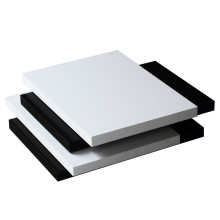
WPC Foam Board vs Outdoor WPC Decking: Understanding the Differences
Wood Plastic Composite (WPC) products are available in various forms for different industries and applications. Among them, WPC foam board and outdoor WPC decking are two products that are sometimes confused because they share the WPC name.
However, they are designed for different purposes and have significant differences in material composition, internal structure, product form, and processing methods.
WPC foam board is a lightweight sheet material commonly used in furniture manufacturing, interior decoration, and other panel-based applications. Outdoor WPC decking, on the other hand, is primarily designed for outdoor flooring projects such as patios, garden walkways, and poolside areas.
Understanding these differences is important for importers, distributors, furniture manufacturers, and other buyers when selecting the right material for their projects.
In this article, we will compare WPC foam board and outdoor WPC decking and explain their characteristics, applications, and key purchasing considerations.
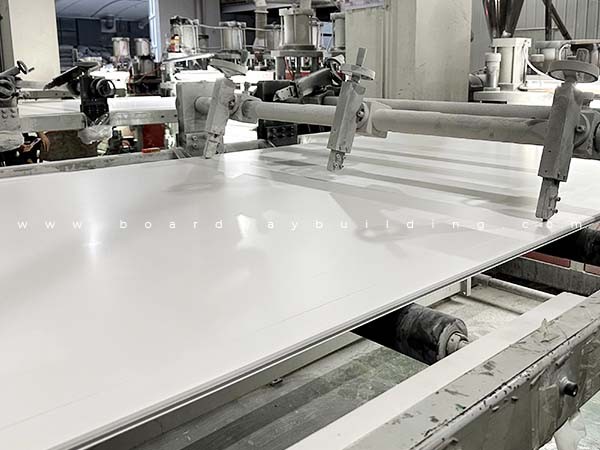
PVC Foam Board Production
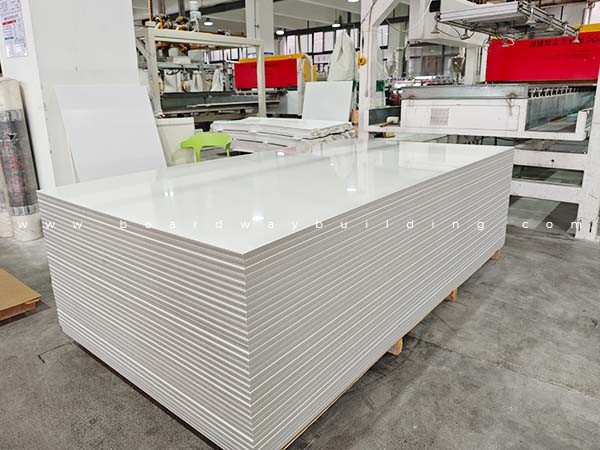
PVC Co-extruded Foam Board
1. What Is WPC Foam Board?
WPC foam board is a type of wood-plastic composite sheet material produced through a foaming process. It generally combines a PVC-based material system with wood flour and other processing additives to create a lightweight board with a foamed internal structure.
Unlike traditional solid wood-plastic composite products, WPC foam board is manufactured in flat sheet form, making it suitable for applications that require cutting, drilling, routing, and other fabrication processes.
Material Composition and Structure
The composition of WPC foam board varies depending on the manufacturer and intended application.
For Boardway's WPC foam board, wood flour is added to the PVC foam board production system at approximately 5–10%. The material is processed into a foamed sheet with a relatively lightweight core structure.
This combination gives the product characteristics associated with PVC foam board while incorporating a small proportion of wood flour into the material composition.
WPC foam board is supplied in flat panels rather than decking profiles. Buyers can select different thicknesses, densities, and dimensions according to their manufacturing requirements.
Common Applications of WPC Foam Board
Because it is available in sheet form and can be further processed, WPC foam board is used in various panel-based applications, including:
Its suitability for a particular application depends on the board's specifications, processing requirements, and the performance needed in the finished product.

PVC Foam Board for Bookshelf

PVC Foam Board Cabinet
2. What Is Outdoor WPC Decking?
Outdoor WPC decking is a wood-plastic composite product designed primarily for outdoor flooring and landscaping applications.
It combines wood-based materials, such as wood flour or wood fibers, with plastic polymers and other additives. The specific formulation varies between manufacturers and product types.
Unlike WPC foam board, outdoor WPC decking is generally manufactured as elongated profiles or planks. These products may have solid or hollow internal structures, depending on the design and production process.
Material Composition and Structure
Outdoor WPC decking commonly uses PE, HDPE, or other suitable polymer systems combined with wood-based fillers.
The materials are processed into decking profiles with dimensions and surface designs intended for outdoor installation.
Some products feature wood-grain textures or other embossed surfaces to create a wood-like appearance. Their profiles may also incorporate grooves, hollow chambers, or other structural features depending on the manufacturer's design.
Because outdoor decking is exposed to changing weather conditions, its formulation and product design need to consider factors such as moisture exposure, sunlight, temperature changes, and installation conditions.
Common Applications of Outdoor WPC Decking
Outdoor WPC decking is commonly used in:
The product should be selected according to the environmental conditions and technical requirements of each project.
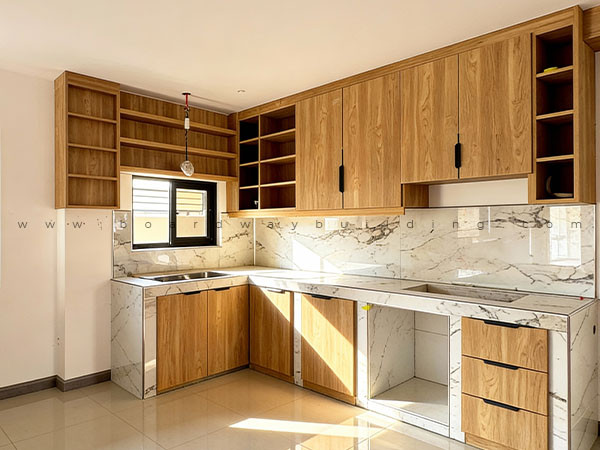
PVC Foam Board for Cabinet Doors
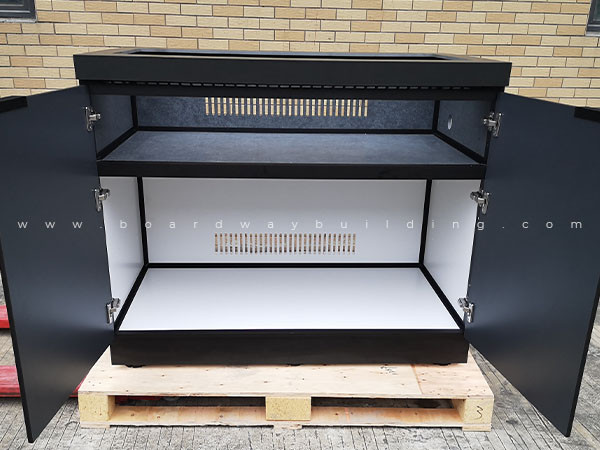
PVC Foam Board for Side Panels
3. WPC Foam Board vs Outdoor WPC Decking: Key Differences
Although both products belong to the broader wood-plastic composite category, WPC foam board and outdoor WPC decking differ in several important ways.
The following comparison provides a quick overview.
| Comparison | WPC Foam Board | Outdoor WPC Decking |
| Material system | PVC-based with wood flour | Commonly PE, HDPE, or other polymer-based systems with wood flour or fibers |
| Internal structure | Foamed structure | Solid or hollow profile |
| Product form | Flat sheets or panels | Long decking boards or profiles |
Main applications | Furniture and interior panel fabrication | Outdoor flooring and landscaping |
Processing | Cutting, drilling, routing, and fabrication | Cutting, fastening, and installation |
Surface options | Smooth surfaces or further decorative finishes | Often wood-grain or textured surfaces |
Main selection factors | Density, thickness, dimensions, and machining requirements | Profile design, outdoor performance, surface texture, and installation requirements |
Let's look at these differences in more detail.
3.1 Differences in Material Composition
One of the main differences is the material system used in each product.
WPC foam board can be manufactured using a PVC-based formulation with wood flour added to the material. In Boardway's production system, the wood flour content is approximately 5–10%.
Outdoor WPC decking often uses PE, HDPE, or other polymer systems combined with wood fibers or wood flour. The formulation is developed according to the intended outdoor application and the required product characteristics.
Therefore, the term "WPC" does not refer to one fixed material formula. Buyers should check the actual polymer base, wood content, and product specifications instead of assuming that all WPC products have the same composition.
3.2 Differences in Internal Structure and Product Form
The internal structure and product form are another important distinction.
WPC foam board is manufactured as a flat sheet with a foamed core. It is supplied in panel form and can be cut into different shapes and sizes for further fabrication.
Outdoor WPC decking is manufactured as elongated profiles. Depending on the product design, its cross-section may be solid or hollow.
These structural differences influence how the products are processed and used.
For example, a furniture manufacturer may purchase WPC foam board in standard sheet dimensions and cut it into cabinet components. A decking contractor typically purchases decking profiles and installs them using an appropriate fastening or support system.
3.3 Differences in Applications and Processing
WPC foam board is mainly used in applications that require sheet materials.
Its flat-panel form makes it suitable for machining operations such as cutting, drilling, routing, and shaping. It can be processed into different components according to furniture and interior manufacturing requirements.
Outdoor WPC decking is designed around flooring applications. Its profile dimensions, surface textures, fastening systems, and installation methods are developed for outdoor decking projects.
In short, the two products serve different manufacturing and construction needs. WPC foam board is a panel material for fabrication, while outdoor WPC decking is a profile product for flooring and landscaping.
4. How to Choose Between WPC Foam Board and Outdoor WPC Decking
Choosing between these two products should start with the intended end application rather than the product name.
4.1 Choose WPC Foam Board for Furniture and Interior Applications
WPC foam board may be a suitable option when your project requires:
For importers, distributors, and furniture manufacturers, it is important to confirm the board's density, thickness, dimensions, and processing requirements before placing a bulk order.
4.2 Choose Outdoor WPC Decking for Outdoor Flooring Projects
Outdoor WPC decking is generally the appropriate product category when your project involves:
When purchasing outdoor decking, buyers should pay attention to the product's weather resistance, dimensional stability, surface characteristics, drainage design, and installation requirements.
These properties should be evaluated using the manufacturer's technical specifications and relevant test results.
5. What Should Buyers Check Before Purchasing WPC Foam Board?
For importers, wholesalers, and manufacturers, selecting the right WPC foam board involves more than simply confirming that the material contains wood flour.
Several specifications should be evaluated before purchasing.
5.1 Density
Density is an important specification because it affects the board's weight and can influence its rigidity and processing behavior.
However, density alone does not determine the overall performance of WPC foam board. The material formulation, internal structure, thickness, and manufacturing process also play important roles.
Buyers should select a suitable density based on the intended application and verify that the supplied boards meet the agreed specifications.
5.2 Thickness
Board thickness should be selected according to the dimensions and structural requirements of the finished product.
Furniture components, decorative panels, and other fabricated products may require different thicknesses.
It is advisable to provide the manufacturer with details of the intended application and processing method when requesting a quotation.
5.3 Board Dimensions
Standard and customized dimensions can affect material utilization and production efficiency.
Before ordering, buyers should confirm:
Selecting suitable dimensions can help reduce unnecessary cutting and material waste during production.
5.4 Surface Quality
Surface quality is particularly important for applications where the board will remain visible or receive additional finishing.
Buyers should check surface flatness, smoothness, consistency, and suitability for subsequent processing or finishing operations.
If the boards will be laminated, painted, or otherwise finished, the surface requirements should be discussed with the manufacturer in advance.
5.5 Machining Requirements
Different manufacturing processes may place different demands on the board.
Buyers should clarify whether the material needs to undergo:
Providing sample drawings or describing the finished product can help the manufacturer recommend suitable board specifications.
5.6 Customization Options
For bulk purchasing and OEM projects, customization can be an important consideration.
Depending on the manufacturer's capabilities, buyers may discuss customized thicknesses, densities, dimensions, colors, and other product requirements.
Clear communication about the intended application and production volume helps both parties evaluate the most appropriate specifications.
6. WPC Foam Board Manufacturer for Furniture and Interior Applications
For buyers looking for WPC foam board for furniture manufacturing, interior panels, and other fabrication applications, choosing a manufacturer with relevant PVC foam board production experience is an important step.
Boardway manufactures WPC foam board using its PVC foam board production system, with approximately 5–10% wood flour incorporated into the material.
The product is supplied in flat sheet form and is intended for panel-based applications rather than outdoor decking installation.
As a PVC foam board manufacturer, Boardway can discuss different product specifications with importers, distributors, and manufacturers according to their requirements.
When requesting product information or a quotation, buyers are encouraged to provide details such as:
Required board thickness and dimensions. Target density. Intended application. Machining or finishing requirements. Estimated order quantity.
These details help facilitate product evaluation and specification confirmation.
Looking for a reliable WPC foam board supplier for your business? Contact Boardway to discuss your application and purchasing requirements.
Conclusion: Understand the Product Before Choosing the Material
WPC foam board and outdoor WPC decking share the broad wood-plastic composite category, but they are designed for different purposes.
WPC foam board is a flat, foamed sheet material commonly used for furniture manufacturing, interior panels, and other fabrication applications. Outdoor WPC decking is manufactured as solid or hollow profiles for outdoor flooring and landscaping projects.
For buyers, understanding the material composition, internal structure, product form, and intended application is essential to selecting the right product.
If your business requires WPC sheet materials for furniture or interior applications, WPC foam board may be the product category worth exploring. Contact Boardway to discuss your required specifications and application needs.
Frequently Asked Questions
1. Is WPC foam board the same as WPC decking?
No. Although both belong to the wood-plastic composite category, they differ in material formulation, internal structure, product form, and applications.
WPC foam board is a flat sheet material with a foamed structure, while WPC decking is generally manufactured as solid or hollow profiles for outdoor flooring.
2. What is the difference between PVC WPC foam board and traditional WPC board?
PVC WPC foam board uses a PVC-based material system and has a foamed internal structure. Traditional WPC products can use different polymer bases, such as PE or HDPE, and may be manufactured as solid profiles, hollow profiles, or other product forms.
The exact differences depend on the manufacturer's formulation and production process.
3. Is WPC foam board suitable for outdoor use?
Suitability depends on the specific formulation, product specifications, and outdoor exposure conditions.
Buyers should not assume that every WPC foam board is suitable for prolonged outdoor exposure simply because it contains wood-plastic composite materials. Relevant weather-resistance and performance data should be confirmed with the manufacturer.
4. Can WPC foam board be used for furniture manufacturing?
Yes. WPC foam board is available in flat sheet form and can be used for selected furniture and interior panel applications. It can undergo fabrication processes such as cutting, drilling, and routing, depending on the board specifications and processing requirements.
5. Is WPC foam board solid or foamed inside?
WPC foam board has a foamed internal structure. This distinguishes it from many traditional solid WPC products. The actual internal structure and density depend on the product formulation and manufacturing process.
6. What specifications should buyers consider when purchasing WPC foam board?
Important specifications include density, thickness, board dimensions, surface quality, and machining requirements. Buyers should also communicate the intended application, required quantity, and any customization needs to the manufacturer before placing an order.
- Want to learn more about PVC foam boards? Visit our PVC Foam Board main page.
- READ MORE