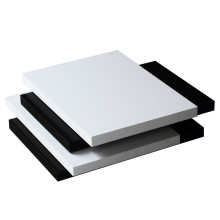
How to Evaluate WPC Foam Board Quality Before Bulk Purchasing
When purchasing PVC foam board in bulk, evaluating product quality is essential for maintaining consistent production, reducing material waste, and avoiding unexpected costs. A board that looks acceptable in a photograph or passes a quick visual inspection may still have dimensional variations, inconsistent internal structure, or machining issues that affect its performance in the final application.
For importers, distributors, furniture manufacturers, and construction material suppliers, quality evaluation should go beyond checking a single sample. It should include specification verification, physical inspection, application-specific testing, and an assessment of the manufacturer's quality control capabilities.
This guide explains how to evaluate PVC foam board quality before placing a bulk order and what to check to help ensure the supplied material meets your requirements.
1. Confirm Product Specifications Before Evaluating Quality
Before inspecting PVC foam board, establish the specifications against which its quality will be evaluated. Without clearly defined requirements, it can be difficult to determine whether a product is acceptable for your application.
The key specifications to confirm include:
Different PVC foam board types have different structures and surface characteristics. A Celuka board, for example, has a denser outer skin, while free foam board typically has a more uniform cellular structure through its thickness. Co-extruded products may have distinct outer layers designed to provide specific surface characteristics.
These differences mean that quality criteria should be appropriate for the selected product rather than applied uniformly to every type of PVC foam board.
Before production begins, confirm the specifications with your supplier in writing. A clear specification sheet provides a common reference for sample approval, production inspection, and final acceptance.
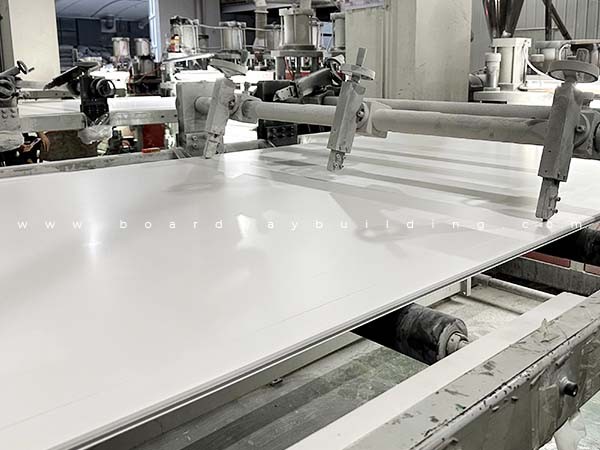
PVC Foam Board Production
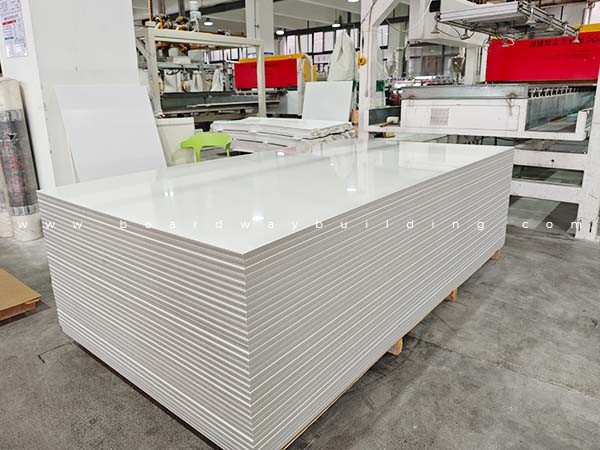
PVC Co-extruded Foam Board
2. Inspect Surface Quality and Visual Appearance
Visual inspection is one of the simplest ways to identify potential quality issues. However, the inspection criteria should reflect the intended application and the agreed product specifications.
2.1 Check Surface Smoothness and Consistency
Examine the board under adequate lighting to identify visible defects such as scratches, dents, uneven areas, stains, or other surface irregularities.
For applications involving lamination, printing, painting, or decorative finishing, surface consistency can be particularly important. Defects that appear minor on an unfinished board may become more noticeable after additional processing.
For sanded boards, check whether the surface condition is consistent with the agreed finish. For co-extruded boards, inspect the outer layer for visible irregularities that could affect appearance or subsequent processing.
2.2 Verify Color and Surface Finish
Compare the delivered board with the approved sample or reference standard. Check the color, gloss level, texture, and overall appearance.
If the order includes multiple boards, inspect several pieces to identify noticeable variations. For laminated PVC foam board, also examine the decorative layer for visible wrinkles, bubbles, scratches, or other defects that may affect the finished product.
The acceptable level of variation should be agreed upon before mass production, particularly when the boards will be used together in the same furniture or interior project.
2.3 Examine Board Edges
Inspect the cut edges for cracks, chipped areas, irregular cutting, or other visible defects.
The edge condition can affect applications that require precise cutting, drilling, assembly, or edge finishing. However, an edge inspection alone cannot establish the quality of the entire internal structure.
Any defects that could interfere with the intended fabrication process should be documented and discussed with the supplier.

PVC Foam Board for Kitchen Cabinets
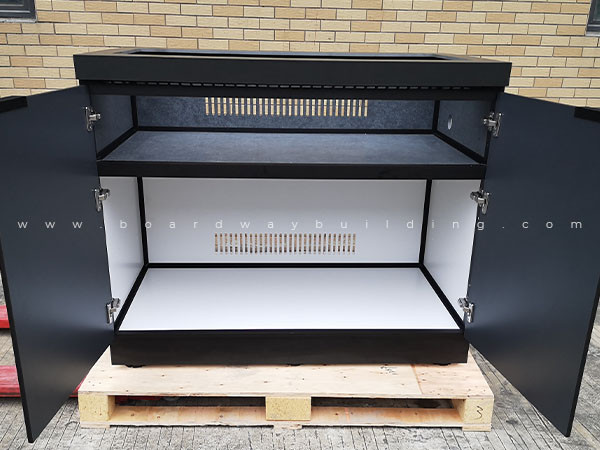
PVC Foam Board for Side Panels
3. Verify Thickness, Dimensions, and Flatness
Dimensional accuracy is important when PVC foam board is used for furniture manufacturing, cabinet components, interior panels, and other applications that require consistent fit and assembly.
3.1 Measure Thickness at Multiple Points
Do not rely on a single thickness measurement to represent an entire board.
Use an appropriate measuring instrument to check multiple locations according to the agreed inspection procedure. Record the measurements and compare them with the specified nominal thickness and permitted tolerance.
If the measurements vary significantly between locations, investigate whether the variation exceeds the agreed requirements.
The appropriate tolerance depends on the product type, manufacturing process, thickness, and intended application. Buyers should therefore confirm acceptable limits with the manufacturer rather than assume that one tolerance applies to every PVC foam board.
3.2 Check Length and Width
Measure the board's length and width using suitable measuring tools. Confirm that the dimensions match the purchase order and agreed specifications.
For manufacturers using CNC cutting or automated fabrication equipment, dimensional consistency can help reduce trimming requirements and material waste.
If the boards will be cut into standardized components, even relatively small dimensional deviations may affect material planning or downstream processing. The significance of these deviations should be assessed against the customer's actual production requirements.
3.3 Evaluate Flatness
Place the board on an appropriate reference surface or use an agreed inspection method to check for visible warping, bowing, or unevenness.
Flatness can influence the handling and processing of PVC foam board, particularly when the material is used for lamination, CNC machining, or panel assembly.
Storage conditions, handling, board thickness, and manufacturing characteristics may all affect flatness. Buyers should define acceptable limits and inspection methods based on the intended use rather than relying solely on visual judgment.
| Inspection item | What to check | Why it matters |
| Thickness | Measurements at multiple locations | Helps verify dimensional consistency |
| Length and width | Actual dimensions against the order | Supports accurate cutting and assembly |
| Flatness | Warping or unevenness | Helps prevent processing and fitting issues |
Edge condition | Cracks, chips, and irregularities | Helps identify potential fabrication problems |
4. Assess Density and Internal Structure
Surface appearance and dimensions are important, but they do not provide a complete picture of PVC foam board quality. Density and internal structure should also be considered, especially when the material will be subjected to machining, fastening, or mechanical loads.
4.1 Understand the Role of Density
Density can influence the weight, rigidity, machining behavior, and application suitability of PVC foam board.
However, higher density does not automatically mean better quality. The appropriate density depends on the board structure, thickness, formulation, and intended application.
For example, a board intended for decorative panels may have different requirements from one used for furniture components that require drilling or mechanical fastening.
Rather than selecting a board based on density alone, evaluate density alongside the other specifications and, where necessary, application-specific test results.
4.2 Examine the Internal Structure
Inspecting a representative cut edge can provide an initial indication of the board's internal structure. Look for obvious irregularities, damaged areas, or visible inconsistencies that may affect the intended use.
Different PVC foam board types naturally have different structural characteristics. A denser outer skin may be expected in Celuka board, while free foam board generally has a more uniform cellular structure.
These differences should not automatically be interpreted as defects. The inspection must account for the product's intended structure.
Visual inspection of a cut edge has limitations and cannot identify every internal defect. If internal uniformity is critical, discuss appropriate inspection or testing methods with the manufacturer.
4.3 Match the Board to Its Intended Application
The suitability of a PVC foam board should be assessed in relation to the finished product.
For furniture components, relevant considerations may include machining quality, fastening requirements, dimensional stability, and the intended service conditions. For decorative panels, surface consistency and compatibility with the finishing process may be more important.
Define the performance requirements before selecting the board. This allows the supplier to recommend a suitable product specification rather than relying on a general assumption that one board type is suitable for every application.
5. Test Machining and Fabrication Performance
For many B2B buyers, PVC foam board is not the final product. It is a material that must be cut, drilled, routed, laminated, assembled, or otherwise processed.
A sample that looks good but performs poorly during fabrication can create production delays, waste, and additional costs. For this reason, application-specific testing should be part of the quality evaluation process.
5.1 Evaluate Cutting and CNC Routing
If the board will undergo CNC machining, test it using a representative cutting or routing operation.
Examine the finished edges for chipping, tearing, roughness, or other defects that could affect the final product. Also check whether the machined dimensions meet the required specifications.
Processing results depend on several factors, including board structure, thickness, tooling, machine condition, and cutting parameters. A poor machining result does not necessarily indicate a material defect, so the test conditions should be appropriate for the board being evaluated.
For bulk purchasing, it is useful to test the material using the equipment and fabrication methods employed in your own production process.
5.2 Check Drilling and Screw Fixing
For applications involving mechanical fasteners, evaluate the board's behavior during drilling and assembly.
Check whether holes can be produced consistently and whether the material shows visible cracking, chipping, or other damage around the drilled areas.
If screws, hinges, brackets, or other hardware will be installed, test the actual connection design under representative conditions. Board structure, density, thickness, fastener type, installation method, and loading conditions can all affect the result.
A simple installation test can help identify obvious issues, but it should not be treated as a standardized measurement of screw-holding strength. Where specific mechanical performance is required, establish an appropriate test method and acceptance criteria.
5.3 Test Bonding, Lamination, and Other Finishing Processes
If the board will be laminated, painted, bonded, or otherwise finished, evaluate compatibility with the intended process.
For laminated PVC foam board, inspect the surface appearance and bonding quality after processing. For other finishing methods, check whether the resulting surface meets the required appearance and application standards.
Compatibility depends on the board's surface characteristics, the finishing materials, and the process conditions. Buyers should confirm that the selected board is suitable for their intended finishing method before committing to a large order.
Whenever possible, use a sample test that reproduces the actual production process rather than relying solely on a supplier's general product description.
6. Evaluate Quality Consistency Across Production Batches
One of the most important considerations in bulk purchasing is whether the supplier can deliver products that consistently meet the agreed specifications.
A sample may be acceptable, but that alone does not establish that every board in a bulk shipment will have the same dimensions, surface quality, or processing characteristics.
6.1 Do Not Rely on a Single Sample
A sample is useful for confirming product suitability, but it represents only a limited amount of material.
Before placing a large order, discuss how the supplier controls production consistency and how finished products are inspected. Depending on the order size and risk level, buyers may also consider pre-shipment inspection or an agreed sampling procedure.
The objective is to establish a reasonable process for verifying the shipment, not to assume that one approved sample guarantees the quality of every subsequent board.
6.2 Establish Inspection Criteria Before Production
Agree on the acceptance criteria before mass production begins.
These should cover the relevant product specifications, dimensional tolerances, appearance requirements, inspection methods, sampling arrangements, and procedures for handling nonconforming products.
Where appropriate, retain an approved reference sample or documented specification for comparison during production and final inspection.
Clear acceptance criteria help prevent disagreements caused by different expectations about what constitutes acceptable quality.
6.3 Review Quality Records and Traceability
Ask the supplier what quality records are available for the product and order.
Depending on the manufacturer's quality management practices, relevant records may include inspection results, production batch identification, specification confirmations, and documentation of corrective actions when problems occur.
The availability and format of these records will vary between manufacturers. Buyers should confirm which documents can actually be provided rather than assume that every supplier maintains the same system.
For recurring orders, consistent documentation can make it easier to compare deliveries and investigate any changes in product performance.
7. Assess the Supplier's Quality Control Capabilities
Product inspection is only one part of the purchasing decision. The manufacturer's ability to understand specifications, control production, and respond to quality issues also matters.
When evaluating a PVC foam board supplier, consider the following factors.
Specification management: Can the supplier clearly confirm board type, dimensions, density requirements, surface finish, and other order details?
Production and inspection procedures: Can the supplier explain how product quality is checked during manufacturing and before shipment?
Sample approval: Is there a clear process for confirming samples and ensuring that the approved specifications are used for the bulk order?
Communication and corrective action: If a problem occurs, can the supplier investigate the issue, communicate the findings, and agree on appropriate corrective measures?
Manufacturing suitability: Does the supplier's product range and manufacturing capability match the required application, specifications, and expected order volume?
For importers and distributors, these considerations can be especially important when sourcing products repeatedly or supplying multiple downstream customers.
A supplier should be evaluated based on verifiable product information, actual manufacturing capabilities, and clearly defined quality requirements rather than marketing claims alone.
8. A Practical PVC Foam Board Quality Inspection Checklist
Before confirming a bulk purchase, use the following checklist to organize the evaluation process.
| Checkpoint | What buyers should confirm |
Product specifications | Board type, thickness, dimensions, density, and surface finish |
Visual appearance | Surface consistency, color, visible defects, and edge condition |
Dimensional accuracy | Thickness, length, width, and agreed tolerances |
Flatness | Compliance with the agreed inspection requirements |
Internal structure | Whether visible characteristics match the specified board type |
| Machining performance | Suitability for the intended cutting, routing, or drilling processes |
Assembly and fastening | Performance of representative connections where required |
Finishing compatibility | Suitability for the intended lamination, bonding, or coating process |
| Batch consistency | Agreed sampling, inspection, and acceptance procedures |
| Supplier quality control | Available quality records and procedures for handling nonconforming products |
Not every item requires the same level of testing for every application. Prioritize the checks that have the greatest impact on the finished product and establish the required acceptance criteria before production.
For critical applications, additional testing may be necessary to verify specific mechanical or physical properties.
9. Conclusion: Evaluate the Material Before Committing to a Bulk Order
Evaluating PVC foam board quality before bulk purchasing requires more than checking whether the surface looks smooth or the dimensions appear correct.
A reliable assessment begins with clear specifications, followed by visual and dimensional inspection, evaluation of density and internal structure, and testing under representative processing conditions. Buyers should also consider batch consistency and the manufacturer's ability to maintain agreed quality requirements.
For importers, distributors, and manufacturers, a structured evaluation process can help reduce sourcing risks, improve production planning, and establish clearer expectations with suppliers.
At Boardway, we manufacture PVC foam board in different types, thicknesses, densities, and surface finishes for a range of applications. If you are sourcing PVC foam board for furniture manufacturing, interior panels, or other projects, contact our team with your required specifications, intended application, and estimated order quantity.
We can discuss suitable product options and help you identify the specifications that should be confirmed before moving forward with sample evaluation and bulk purchasing.
Frequently Asked Questions
1. How can you check the quality of PVC foam board?
Start by confirming the product specifications, then inspect the surface, edges, thickness, dimensions, and flatness. Depending on the application, also evaluate density, visible internal structure, and machining performance. For bulk orders, establish inspection and acceptance criteria before production.
2. What specifications should be checked before buying PVC foam board in bulk?
Important specifications include board type, thickness, length, width, density where applicable, surface finish, color, dimensional tolerances, and any application-specific requirements. Buyers should confirm these details in writing with the supplier before placing an order.
3. Does higher-density PVC foam board always mean better quality?
No. Density is one factor affecting a board's properties, but it does not independently determine overall quality or suitability. The appropriate density depends on the board structure, thickness, intended application, and required performance.
4. How can buyers check consistency between samples and bulk orders?
Approve a representative sample, document the agreed specifications, and establish inspection criteria before mass production. Depending on the order, buyers can also arrange sampling inspections or pre-shipment checks to verify that the delivered material meets the agreed requirements.
5. What quality documents should buyers request from a PVC foam board supplier?
Depending on the product and supplier's capabilities, buyers may request a technical specification sheet, available inspection records, relevant test reports, and production batch identification where available. The required documents should reflect the product's intended application and the purchasing agreement.
- Want to learn more about PVC foam boards? Visit our PVC Foam Board main page.
- READ MORE