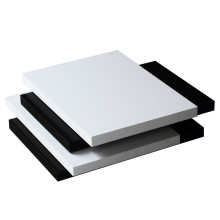
Standard PVC Trim Profiles vs. Custom Extruded Profiles: A Buyer's Guide
When sourcing PVC trim boards and moulding profiles, buyers often face an important decision: should they choose an existing profile from a manufacturer's product range or request a custom extruded profile designed for a specific application?
Both options have their advantages. Standard PVC trim profiles can simplify product selection and sourcing, while custom extrusion may be worth considering when existing profiles cannot meet specific dimensional or design requirements.
For building material distributors, importers, wholesalers, and manufacturers, the right choice depends on the intended application, required dimensions, order volume, development costs, and long-term purchasing plans. Understanding these factors can help you select a suitable profile and work more efficiently with your PVC trim supplier.
What Are Standard PVC Trim Profiles?
Standard PVC trim profiles are existing profile designs that a manufacturer has already developed for production. Buyers can select from available shapes, dimensions, and product specifications instead of developing a new cross-section from scratch.
These profiles may include flat trim boards, decorative mouldings, and other shaped trim products used for finishing, covering edges, or creating decorative details in building projects. The available designs and dimensions vary by manufacturer.
For distributors and wholesalers, standard profiles offer a practical way to establish a product range without investing in new profile development. They can also be suitable for contractors, builders, and manufacturers whose requirements match the supplier's existing products.
Before placing an order, buyers should confirm the actual profile dimensions, cross-sectional shape, material specifications, surface finish, color options, packaging, and minimum order quantity. A profile that looks similar to the required design may still differ in important dimensions.
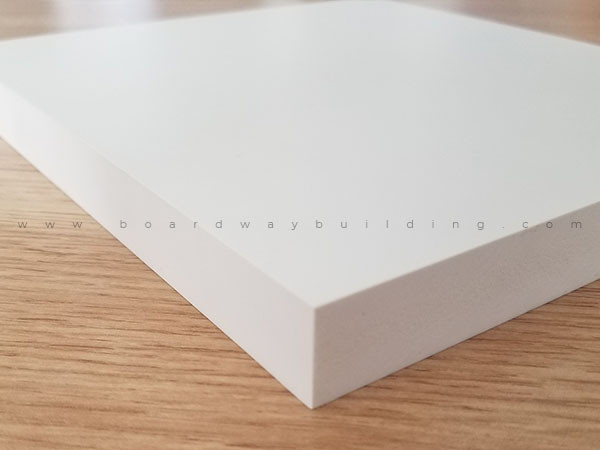
Cellular PVC Trim Board
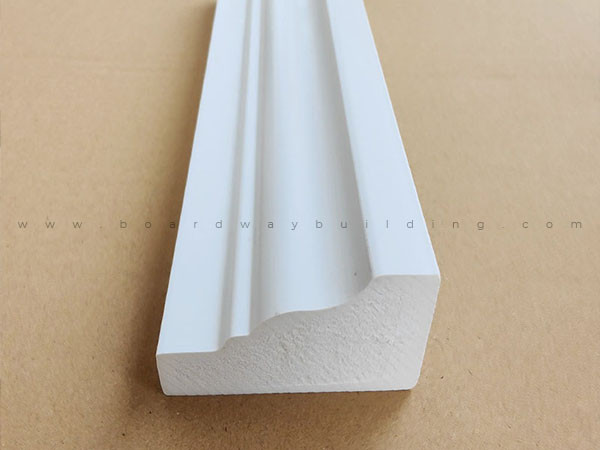
Cellular PVC Moulding
What Are Custom Extruded PVC Trim Profiles?
Custom extruded PVC trim profiles are developed around a customer's specific design or application requirements. Instead of selecting an existing cross-section, the buyer provides a drawing, sample, or set of dimensional requirements for the manufacturer to evaluate.
Custom extrusion may be appropriate when a project requires a particular cross-sectional shape, dimensions that are unavailable in the standard product range, or a dedicated profile for a proprietary product.
The development process generally involves reviewing the proposed design, checking manufacturing feasibility, evaluating tooling requirements, and confirming the product specifications. Depending on the project, sample production and approval may also be necessary before regular manufacturing begins.
However, custom extrusion does not automatically mean that every requested shape or dimension can be produced. The feasibility of a design depends on factors such as profile geometry, wall thickness, material requirements, dimensional tolerances, and production capabilities.
For this reason, buyers should discuss their requirements with the manufacturer before finalizing a design or committing to an order.
Standard vs. Custom PVC Trim Profiles: Key Differences
Although both options can supply PVC trim products for building and finishing applications, they differ in several important aspects.
| Comparison Factor | Standard PVC Trim Profiles | Custom Extruded PVC Trim Profiles |
| Profile design | Selected from existing designs | Developed around specific design requirements |
Dimensions | Limited to available specifications and feasible adjustments | Greater flexibility, subject to manufacturing feasibility |
Initial development | Usually requires no new profile development | May require design review and tooling development |
Upfront cost | Generally lower when no new tooling is needed | May include tooling and development costs |
Lead time | May be shorter if the product is available or scheduled for production | May require additional time for design review, tooling, and sample approval |
| Order quantity | Depends on the supplier's MOQ and production arrangements | Must account for tooling costs and production economics |
Best suited for | Standard product ranges and applications that match existing profiles | Specialized designs and requirements not met by available profiles |
These differences are general guidelines rather than fixed rules. Actual costs and lead times depend on the supplier, product specifications, production schedule, and order quantity.
For example, a standard profile that is not currently available for immediate production may still require a production lead time. Likewise, a custom profile with a straightforward design may be less complicated to develop than one with complex geometry or demanding tolerances.
The best choice is therefore the option that meets your requirements while providing a practical balance of cost, flexibility, and supply reliability.
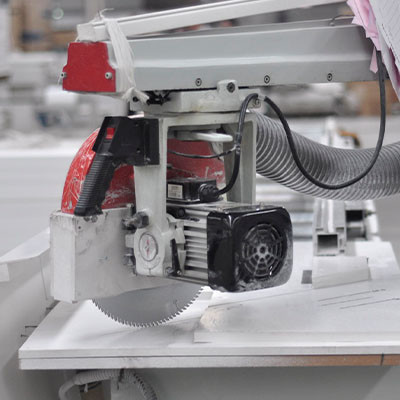
45-degree miter saw
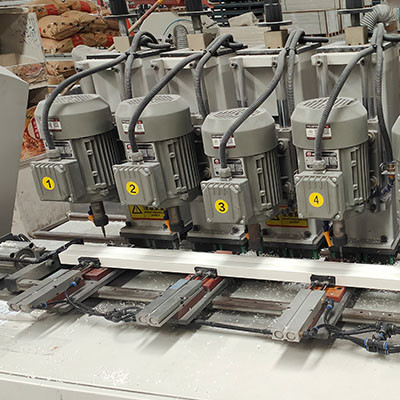
Drilling machine
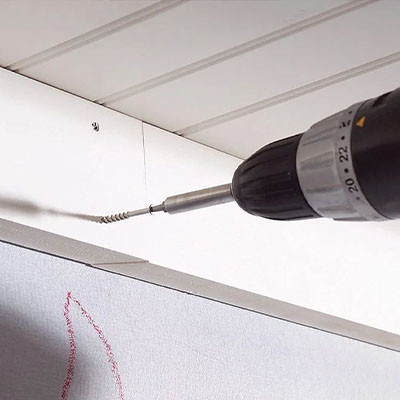
Screw fastening
When Should You Choose Standard PVC Trim Profiles?
Standard PVC trim profiles are often the most practical starting point when your requirements can be met by existing products.
1. Your required dimensions and profile shape are already available.
If an existing profile meets your dimensional and application requirements, developing a new cross-section may add unnecessary cost and complexity. Comparing the supplier's available profiles can help you identify a suitable option before considering customization.
2. You want to establish a regular product range.
For importers, wholesalers, and building material distributors, standard profiles can make it easier to select products for repeat purchasing. Choosing from an established range may also simplify product documentation, sample evaluation, and inventory planning.
3. You want to minimize initial development work.
When no new profile design is needed, buyers can generally avoid the additional design review and tooling development associated with a new extrusion profile. This can be particularly useful when testing market demand or sourcing products for an established application.
4. You need to compare multiple profile options efficiently.
An existing product range allows buyers to compare different cross-sections and dimensions before making a decision. Requesting a profile catalog, dimensional drawings, or samples can help confirm whether a standard product meets the actual requirements.
Before selecting a standard profile, make sure that the dimensions and cross-sectional details match your needs. Do not rely on product names or general appearance alone.
When Is Custom PVC Trim Extrusion Worth Considering?
Custom extrusion becomes worth exploring when existing products cannot adequately meet your requirements.
1. No existing profile matches your design.
A project may require a particular cross-section, width, thickness, edge shape, or combination of dimensions that is not available in a manufacturer's standard range. In this case, a custom profile may provide a more suitable solution than trying to adapt an incompatible product.
2. You are developing your own product or product line.
Manufacturers and brands may need a dedicated trim profile to fit their product design or distinguish their offering from standard alternatives. Custom extrusion can provide more control over the profile geometry, subject to the manufacturer's production capabilities.
3. You expect recurring orders.
If the same custom profile will be purchased repeatedly, it may be worthwhile to evaluate the initial tooling and development costs against the expected purchasing volume. Larger or recurring orders may help spread the initial costs across more units, although the actual economics depend on the project.
4. Existing profiles cannot meet important functional requirements.
A custom design may be appropriate when a profile needs to fit a particular assembly, cover a specific edge, or meet defined dimensional requirements. The intended application should be explained clearly so that the manufacturer can assess whether the proposed design is practical to produce.
Customization should not be the default choice simply because it is available. If an existing profile meets the requirements, it may be the simpler sourcing option. Buyers should first compare available products and consider custom development only when there is a clear need.
What Information Should You Prepare Before Requesting a Custom PVC Profile?
Providing complete information at the beginning can help a manufacturer evaluate a custom PVC trim profile more efficiently. It also reduces the risk of misunderstandings during design review and sample approval.
When contacting a supplier, prepare the following information where available.
Profile drawing or sample
A technical drawing showing the cross-sectional shape is the most useful starting point. Include a physical sample, hand-drawn sketch, or reference image if a formal drawing is not available.
Dimensions and tolerances
Identify the overall width, height, wall thickness, and other critical dimensions. If specific tolerances are necessary, state them clearly so the manufacturer can assess their feasibility.
Application and operating conditions
Explain where and how the profile will be used, such as for exterior trim, decorative finishing, edge covering, or another building-related application. Relevant environmental or functional requirements should also be communicated.
Material and appearance requirements
Specify any known material requirements, color preferences, surface finish, or other appearance details. If you are unsure about the appropriate material specifications, describe the application and discuss suitable options with the manufacturer.
Estimated order quantity
Provide the expected quantity for the initial order and, if possible, your anticipated annual demand. This information helps the supplier evaluate production arrangements and the potential economics of tooling development.
Packaging and labeling requirements
If the products need individual packaging, bundled packaging, private labels, or customized outer packaging, include these requirements in the initial inquiry.
The more clearly you define the requirements, the easier it is for the supplier to assess feasibility and prepare a relevant quotation. Final specifications, samples, and commercial terms should be confirmed before mass production.
How to Compare the Total Cost of Standard and Custom Profiles
The purchase price per piece or per meter is only one part of the sourcing decision. Buyers should consider the total cost of obtaining and supplying the required profiles.
For standard PVC trim profiles, the main factors may include the product price, minimum order quantity, packaging, transportation, and any additional processing required for the intended application.
For custom profiles, buyers may also need to account for tooling, design review, sample production, approval time, and other development-related costs. The applicable charges and responsibilities should be clarified with the manufacturer before proceeding.
Order volume is particularly important. A custom profile may involve a higher initial investment, but repeated orders could change the overall cost calculation. Conversely, developing a new profile for a small or uncertain order may be difficult to justify if an existing product can meet the requirements.
Lead time should also be considered. If a project has a fixed delivery schedule, allow sufficient time for any required design review, tooling, sample evaluation, and production planning.
Rather than assuming that one option is always cheaper, request quotations based on clearly defined specifications and quantities. Comparing the full sourcing requirements will provide a more reliable basis for your decision.
How Boardway Can Support Your PVC Trim Sourcing
Boardway manufactures PVC trim boards and moulding profiles for building material and related B2B markets. Our product range includes more than 80 profile designs, giving buyers a variety of existing options to evaluate for their sourcing needs.
If you are looking for PVC trim products, you can start by reviewing our available profiles and identifying the shapes and dimensions that best match your application. Confirming the required specifications before ordering helps ensure that the selected product is suitable for your needs.
If your project requires a profile that differs from the available options, you can also contact our team to discuss your drawings, dimensions, application, and expected order quantity. We can review the information and clarify the next steps based on the specific requirements and manufacturing feasibility.
Whether you are sourcing standard PVC trim profiles for regular distribution or exploring a profile for a specialized project, providing clear product requirements is the first step toward an efficient sourcing process.
Contact Boardway to discuss your PVC trim board and moulding profile requirements, request available product specifications, or explore the feasibility of your project.
Frequently Asked Questions
1. What is the difference between standard and custom PVC trim profiles?
Standard PVC trim profiles are existing designs offered by a manufacturer, while custom profiles are developed around specific design or dimensional requirements. Standard profiles may reduce development work, whereas custom extrusion offers more flexibility when existing products cannot meet the requirements.
2. Are custom PVC trim profiles more expensive than standard profiles?
Custom profiles may involve additional tooling and development costs. However, the total cost depends on the profile design, production quantity, material requirements, and repeat-order volume. A quotation based on the actual specifications is the best way to compare the two options.
3. Is there a minimum order quantity for custom PVC extrusion profiles?
The minimum order quantity depends on the manufacturer's production arrangements, profile design, tooling requirements, and order economics. Buyers should provide their expected order volume when requesting a quotation so that the supplier can evaluate the project.
4. How long does it take to develop a custom PVC trim profile?
The development time varies according to design complexity, tooling requirements, sample approval, and production scheduling. Buyers should discuss the required delivery date with the manufacturer and confirm the estimated timeline after the design and specifications have been reviewed.
5. Can an existing PVC trim profile be modified instead of developing a new one?
In some cases, an existing profile may be suitable or a feasible adjustment may meet the requirements. However, not every dimension or cross-sectional feature can be changed without affecting manufacturing feasibility. The manufacturer should evaluate the existing profile and proposed modifications before a decision is made.
6. What information should I provide when requesting a custom PVC trim profile?
Ideally, provide a cross-sectional drawing, dimensions, tolerances, intended application, material and appearance requirements, estimated order quantity, and packaging preferences. If a technical drawing is unavailable, a sample or reference image can help the manufacturer begin the evaluation.
Related Products

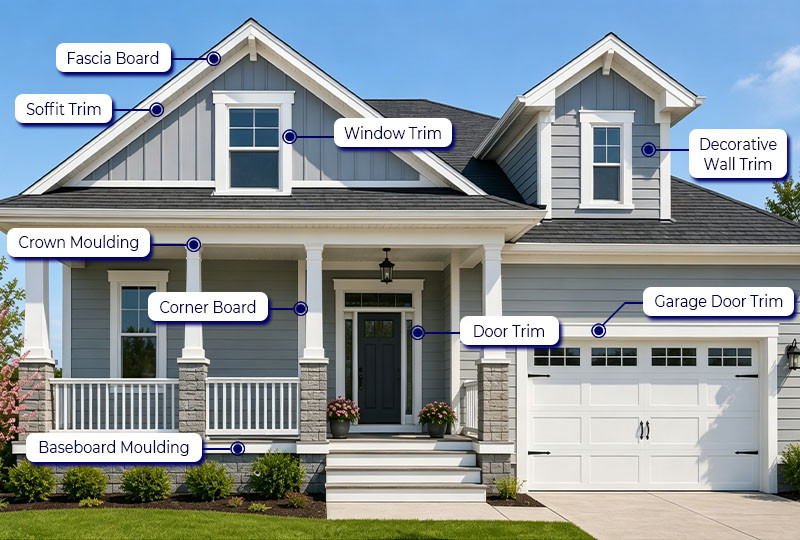
Boardway manufactures durable cellular PVC Trim Board for fascia, soffit, window trim, and exterior architectural applications.
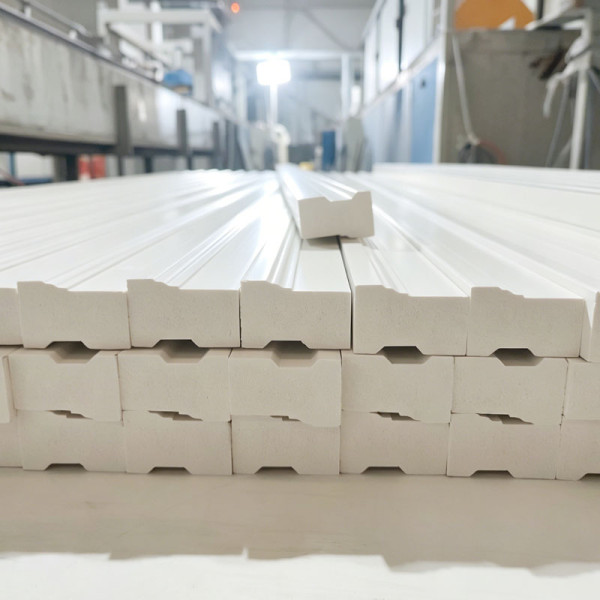
Boardway manufactures decorative cellular PVC Moulding for crown moulding, baseboard, door casing, and decorative trim projects.
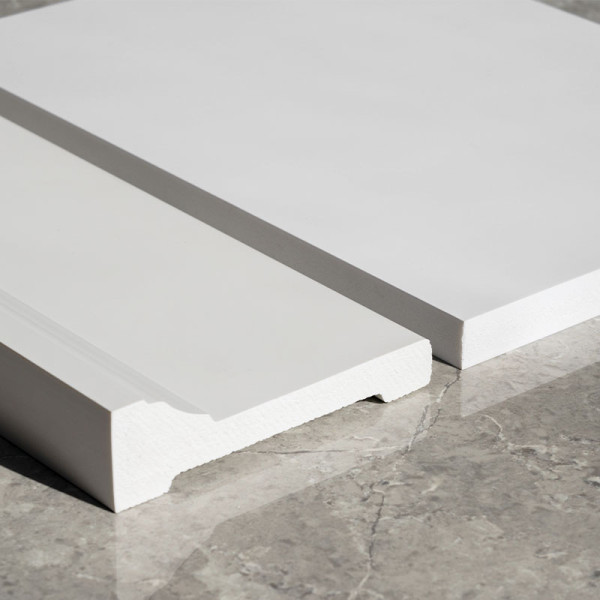
Complete PVC Trim Board & Moulding solutions for exterior and interior architectural applications with OEM customization support.
- Want to learn more about Cellular PVC Trim Boards? Visit our product main page.
- READ MORE