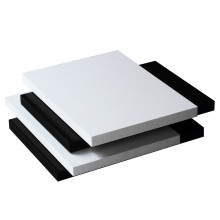
PVC Foam Board vs Particle Board: Pros, Cons, and Cost Comparison
Choosing the right material for kitchen cabinets is crucial for durability, appearance, and long-term value. Among the many options available today, PVC foam board and particle board are two widely used materials, each with its own strengths and limitations.
While particle board has been a traditional choice due to its affordability, PVC foam board for kitchen cabinets is rapidly gaining popularity as a modern, high-performance alternative.
In this article, we will compare PVC foam board vs particle board in terms of durability, water resistance, cost, and overall performance, helping you determine which material is best suited for your kitchen cabinet projects.
What Is PVC Foam Board?
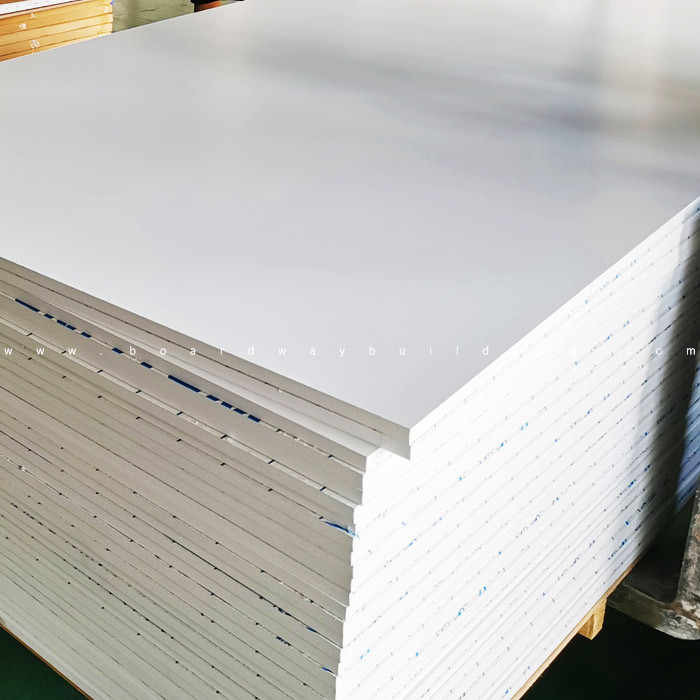
PVC foam board is a lightweight, rigid plastic sheet made from polyvinyl chloride using a foaming process. Its internal closed-cell structure gives it a unique combination of strength and lightness, making it an excellent choice for furniture and construction applications.
100% waterproof Termite and pest resistant Lightweight yet strong Easy to process (cutting, drilling, routing) Smooth surface suitable for lamination
One of the key reasons why PVC foam board for kitchen cabinets is becoming increasingly popular is its superior resistance to moisture and environmental damage. Unlike wood-based materials, it does not absorb water, warp, or swell.
Key characteristics of PVC foam board include:
These features make it particularly suitable for kitchens, bathrooms, and other humid environments.
What Is Particle Board?
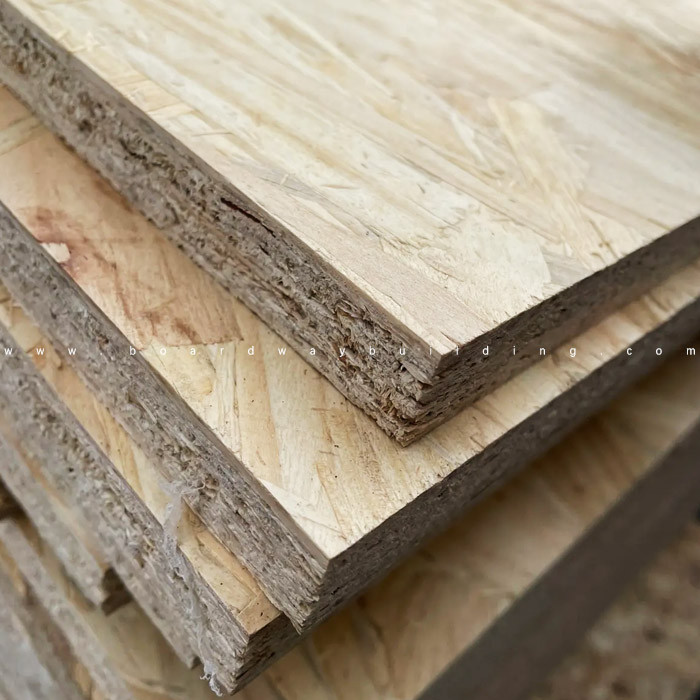
Particle board is an engineered wood product made by compressing wood chips, sawdust, and resin under heat and pressure. It is one of the most affordable materials used in furniture manufacturing and has been widely used for decades.
Due to its low cost and ease of processing, particle board is commonly used in cabinets, wardrobes, and interior furniture. However, its performance is highly dependent on environmental conditions.
Key characteristics of particle board include:Low cost
Easy to cut and shape
Smooth surface for veneer or laminate
Poor moisture resistance Susceptible to swelling and deformation Lower structural strength compared to alternatives
However, it also has notable limitations:
PVC Foam Board vs Particle Board: Key Differences
Below is a direct comparison of the two materials:
| Feature | PVC Foam Board | Particle Board |
Water Resistance | 100% Waterproof | Poor |
Durability | High | Medium |
Weight | Lightweight | Heavier |
| Termite Resistance | Yes | No |
| Lifespan | Long | Shorter |
| Maintenance | Easy | Moderate |
From this comparison, it is clear that PVC foam board offers superior performance, especially in environments exposed to moisture.
Pros and Cons of PVC Foam Board
Advantages
One of the biggest advantages of PVC foam board is its waterproof nature, which makes it ideal for kitchen environments where humidity and spills are common.
It is also highly resistant to termites and pests, unlike wood-based materials. This significantly increases the lifespan of cabinets and reduces maintenance concerns.
Additionally, PVC foam board is lightweight yet strong, making it easier to transport and install. Its smooth surface also supports various finishing options such as lamination and painting.
Disadvantages
The main drawback of PVC foam board is its higher initial cost compared to particle board.
It may also require slightly different processing techniques compared to traditional wood materials, although modern CNC machines can handle it efficiently.
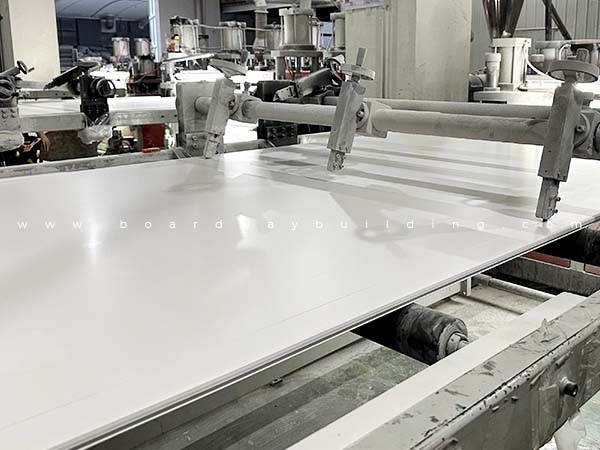
PVC Foam Board Production
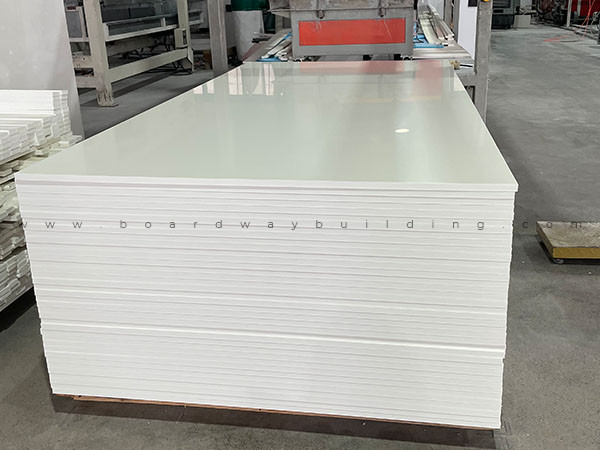
PVC Foam Board
Pros and Cons of Particle Board
Advantages
Particle board is primarily valued for its low cost, making it an attractive option for budget-conscious projects.
It is easy to process using standard woodworking tools and is widely available in most markets.
Disadvantages
However, particle board has several critical limitations.
It is not waterproof and tends to absorb moisture, which can lead to swelling, warping, and eventual structural failure.
Its durability is also relatively low, especially in kitchens where exposure to water and heat is frequent. Over time, this can result in higher maintenance or replacement costs.
Cost Comparison: PVC Foam Board vs Particle Board
When comparing costs, particle board clearly has a lower upfront price. This makes it a popular choice for low-budget or temporary projects.
However, focusing only on initial cost can be misleading.
PVC foam board offers better long-term value due to its durability and resistance to moisture and pests. Cabinets made from PVC foam board require less maintenance and have a longer lifespan, reducing replacement costs over time.
In contrast, particle board cabinets may need repairs or replacement sooner, especially in humid environments.
For homeowners and contractors looking for a cost-effective solution in the long run, PVC foam board is often the better investment.
Which Material Is Better for Kitchen Cabinets?
The answer depends on your specific needs and project conditions.
Overall, PVC foam board is considered one of the best materials for modern kitchen cabinets, especially in regions with high humidity or frequent temperature changes.
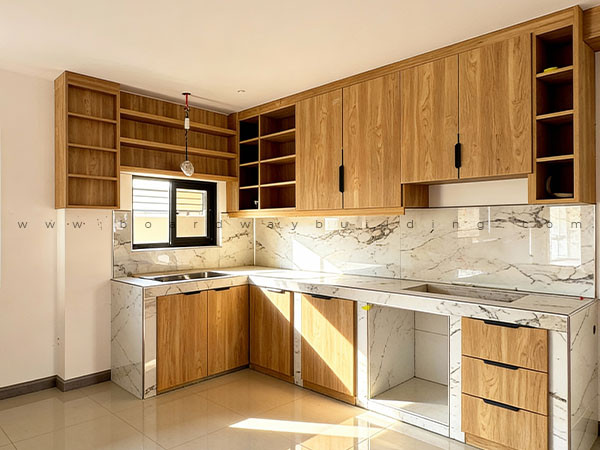
PVC Foam Board for Kitchen Cabinet
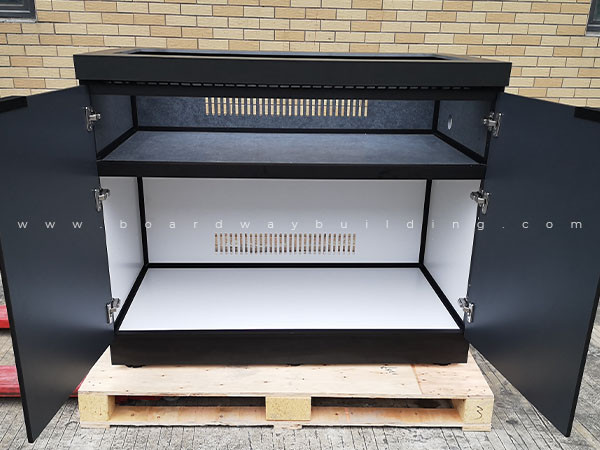
PVC Foam Board for Side Panels
When Should You Choose PVC Foam Board?
You should consider using PVC foam board if:
Your kitchen is exposed to moisture or water You want long-lasting cabinets You are targeting high-end or export markets You want low maintenance materials
In these scenarios, PVC foam board provides clear advantages over traditional wood-based materials.
When Is Particle Board Still a Good Choice?
Particle board can still be a reasonable option in certain cases:
Temporary furniture projects Strict budget constraints Dry indoor environments with minimal humidity
However, it is generally not recommended for kitchens that experience frequent exposure to water.
Conclusion
Both materials have their place in the market, but their performance differs significantly.
Particle board offers affordability and ease of use, making it suitable for low-cost applications. However, its limitations in moisture resistance and durability make it less ideal for kitchen environments.
On the other hand, PVC foam board for kitchen cabinets provides superior performance, including waterproof properties, longer lifespan, and lower maintenance requirements.
For modern kitchens, especially in humid conditions, PVC foam board is undoubtedly the better choice.
If you are looking for a reliable and high-quality solution, PVC foam board is a smart investment that delivers long-term value.
FAQ
Q1. Is PVC foam board better than particle board for kitchen cabinets?
A: Yes, PVC foam board performs better in terms of water resistance, durability, and lifespan, making it more suitable for kitchen use.
Q2. Does particle board get damaged by water?
A: Yes, particle board absorbs moisture and can swell or deform when exposed to water.
Q3. Is PVC foam board expensive?
A: It has a higher initial cost but offers better long-term value due to its durability.
Q4. How long do PVC foam board cabinets last?
A: They typically last much longer than particle board cabinets, especially in humid environments.
Q5. Can PVC foam board replace wood in cabinets?
A: Yes, it is widely used as a modern alternative to traditional wood materials in cabinet manufacturing.
- Want to learn more about PVC foam boards? Visit our PVC Foam Board main page.
- READ MORE