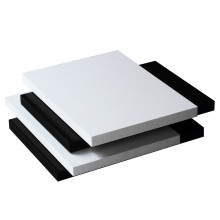
How PVC Foam Board Resists Heat, Moisture and Wear in Kitchens
Kitchens are one of the most demanding environments in any home. Constant exposure to heat, moisture, grease, and daily wear can quickly damage traditional cabinet materials like wood, plywood, or MDF. Swelling, warping, mold growth, and surface deterioration are common issues that reduce both functionality and aesthetics.
As modern homeowners and cabinet manufacturers seek more durable and low-maintenance solutions, PVC foam board has emerged as a reliable alternative. Known for its waterproof structure, heat resistance, and long-lasting performance, PVC foam board for kitchen cabinets is becoming increasingly popular worldwide.
In this article, we'll explore how PVC foam board resists heat, moisture, and daily wear, and why it is an ideal material for kitchen applications.
What Makes PVC Foam Board Ideal for Kitchen Use?
PVC foam board is a lightweight yet rigid material made from polyvinyl chloride (PVC) using a specialized foaming process. Its internal closed-cell structure is the key to its superior performance.
Unlike traditional wood-based materials, PVC foam board does not absorb water, making it inherently waterproof and resistant to humidity. At the same time, it offers excellent dimensional stability, meaning it won’t expand, shrink, or warp under changing environmental conditions.
Key advantages include:
100% waterproof and moisture-resistant Strong resistance to heat and temperature fluctuations Durable and impact-resistant Termite-proof and corrosion-resistant Easy to process, cut, and install
These properties make PVC foam board particularly suitable for kitchen cabinets, where durability and hygiene are essential.
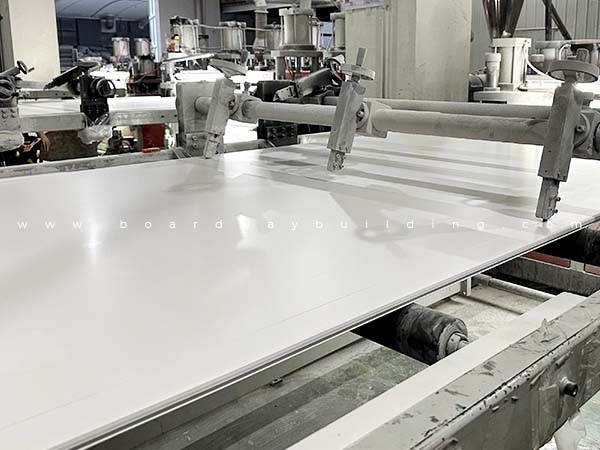
PVC Foam Board Production
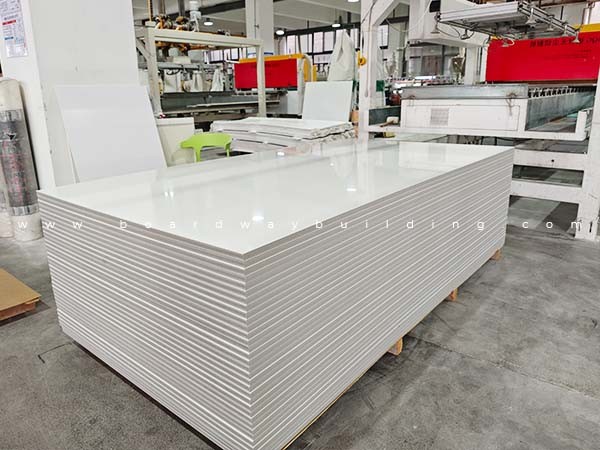
PVC Co-extruded Foam Board
Heat Resistance of PVC Foam Board in Kitchens
How It Handles High Temperatures
Kitchens are constantly exposed to heat from cooking appliances such as stoves, ovens, and microwaves. Materials used in cabinets must be able to withstand these temperature variations without losing their shape or strength.
PVC foam board offers excellent heat resistance under normal kitchen conditions. It maintains structural integrity even when exposed to moderate heat, making it suitable for cabinet doors, carcasses, and panels near cooking areas.
Unlike some materials that soften or deform under heat, PVC foam board remains stable and reliable, ensuring long-term performance.
Comparison with Traditional Materials
When compared to conventional cabinet materials, PVC foam board clearly stands out:
MDF (Medium Density Fiberboard): Tends to deform and weaken when exposed to heat and humidity Solid wood: Prone to cracking, expansion, and warping due to temperature changes Plywood: Offers moderate resistance but can delaminate over time
In contrast, PVC foam board provides a more consistent and maintenance-free solution for kitchen environments.
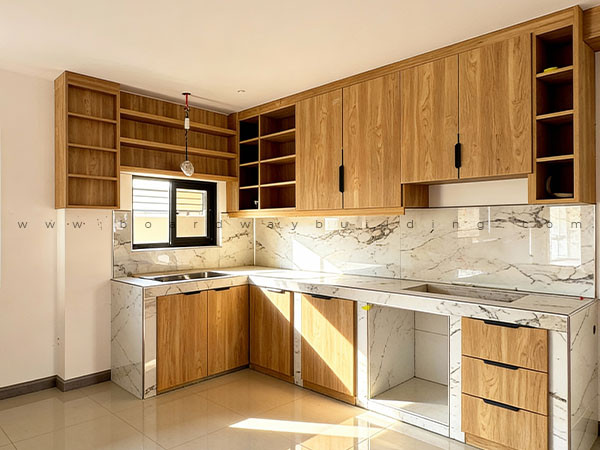
PVC Foam Board for Kitchen Cabinets
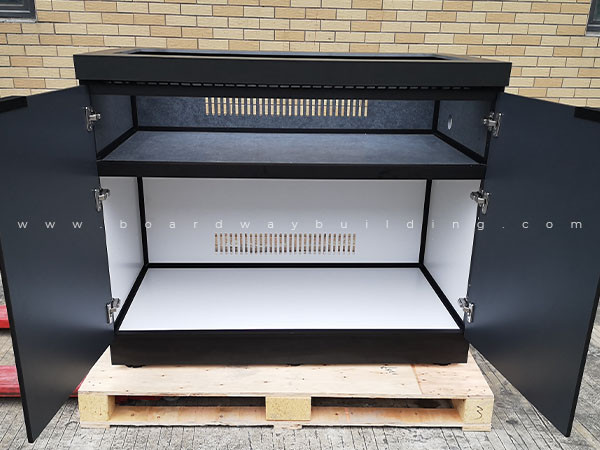
PVC Foam Board for Side Panels
Moisture and Water Resistance
100% Waterproof Structure
One of the biggest challenges in kitchens is moisture. Areas around sinks, dishwashers, and countertops are constantly exposed to water and humidity.
Sink cabinets Under-counter storage Backsplash panels Wall cladding
Thanks to its closed-cell foam structure, PVC foam board is completely waterproof. It does not absorb water, even after prolonged exposure. This makes it an excellent choice for:
No Swelling or Mold Issues
Traditional materials like MDF and particle board absorb moisture easily, leading to swelling, deformation, and mold growth. These issues not only affect appearance but also pose hygiene concerns.
No swelling or expansion No mold or mildew formation No rotting or decay
PVC foam board eliminates these problems entirely:
This ensures a cleaner, safer, and longer-lasting kitchen environment.
Resistance to Daily Wear and Tear
Scratch and Impact Resistance
Kitchen cabinets are subject to constant use—opening and closing doors, handling cookware, and regular cleaning. Over time, this can cause scratches, dents, and surface damage.
PVC foam board is designed to withstand daily wear. Its surface can be further enhanced with lamination or coating, improving scratch resistance and aesthetics.
This makes it suitable for both residential and commercial kitchens where durability is critical.
Long-Term Durability
In addition to surface strength, PVC foam board offers excellent long-term durability. It does not crack, split, or degrade easily over time.
Even after years of use, cabinets made from PVC foam board maintain their shape, strength, and appearance, reducing the need for repairs or replacements.
Why PVC Foam Board Outperforms Other Materials
Below is a quick comparison of PVC foam board with other commonly used cabinet materials:
Property | PVC Foam Board | MDF | Plywood |
Waterproof | √ | × | △ |
Heat Resistance | √ | △ | △ |
Termite Proof | √ | × | × |
Durability | High | Medium | Medium |
Maintenance | Low | High | Medium |
As shown above, PVC foam board offers a balanced combination of performance, durability, and low maintenance, making it a superior choice for kitchen cabinets.
Best Applications of PVC Foam Board in Kitchens
PVC foam board is versatile and can be used in various kitchen components:
Its adaptability allows designers and manufacturers to create modern, durable, and stylish kitchen solutions.
Tips for Maximizing Performance
To get the best results from PVC foam board in kitchen applications, consider the following tips:
Choose the right thickness: Typically 15mm to 18mm for cabinets Use laminated surfaces: Enhances appearance and scratch resistance Ensure proper support: Install on a stable framework for added strength Work with experienced manufacturers: For consistent quality and customization
These practices help maximize the performance and lifespan of PVC foam board products.
Conclusion
PVC foam board has proven to be a highly effective material for kitchen environments. Its ability to resist heat, moisture, and daily wear makes it a reliable and long-lasting solution for modern kitchen cabinets.
Compared to traditional materials like MDF, plywood, and wood, PVC foam board for kitchen cabinets offers superior durability, minimal maintenance, and excellent value over time.
As demand for waterproof, termite-proof, and durable cabinet materials continues to grow, PVC foam board is set to become a standard choice in the industry.
If you are looking for high-quality PVC foam board for your kitchen projects, feel free to contact us for more information, samples, and customized solutions.
PVC Foam Board Kitchen Cabinets FAQ
Q1. Is PVC foam board heat resistant enough for kitchens?
A: Yes, it can withstand normal kitchen temperatures without deformation or damage.
Q2. Is PVC foam board completely waterproof?
A: Yes, its closed-cell structure prevents water absorption entirely.
Q3. Does PVC foam board crack over time?
A: No, it remains stable and durable even after long-term use.
Q4. What thickness is best for kitchen cabinets?
A: Generally, 15mm to 18mm is recommended for optimal strength and durability.
Q5. Is PVC foam board better than MDF for kitchens?
A: Yes, especially in humid environments, as it is waterproof and resistant to swelling and mold.
- Want to learn more about PVC foam boards? Visit our PVC Foam Board main page.
- READ MORE