How to Choose the Right Density and Thickness of PVC Foam Board
Why Density and Thickness Matter in PVC Foam Board Selection
PVC foam board is widely used across advertising, furniture, interior decoration, and construction industries due to its lightweight structure, durability, and excellent workability. However, not all PVC foam boards perform the same.
Two key factors—density and thickness—directly determine the board's strength, rigidity, screw-holding capacity, durability, and overall cost-effectiveness. Choosing the wrong specification may lead to deformation, insufficient load-bearing capacity, or unnecessary material costs.
In this article, we explain how to select the right density and thickness of PVC foam board based on real applications, helping buyers make informed decisions for long-term performance.
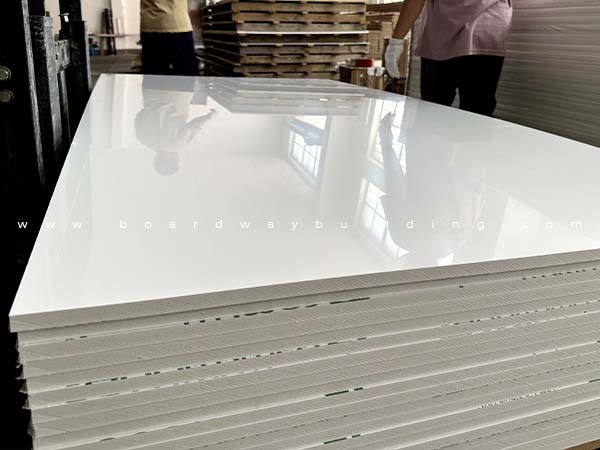
PVC Co-extruded Foam Board
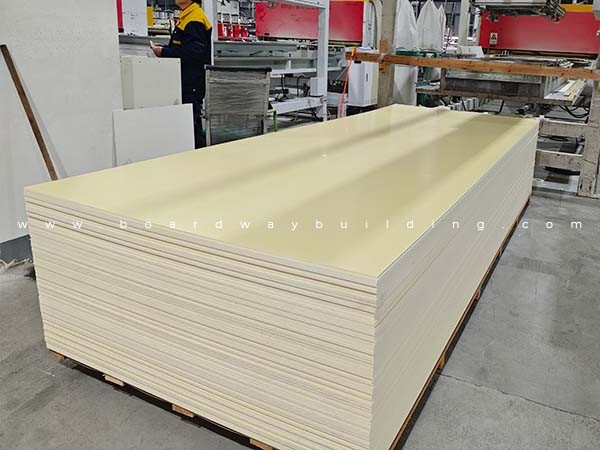
WPC Foam Board
What Does Density Mean in PVC Foam Board?
Definition of Density
Density refers to the weight of the PVC foam board per unit volume, typically measured in g/cm³. It reflects the internal foam structure and material compactness of the board.
At Boardway, PVC foam boards are produced within a density range of 0.4–1.1 g/cm³, allowing us to meet both lightweight and high-strength application requirements.
How Density Affects PVC Foam Board Performance
Density has a direct impact on several key properties:Mechanical strength & rigidity: Higher density boards provide better stiffness and resistance to bending. Screw holding strength:
Medium to high density boards offer stronger screw retention, essential for furniture and cabinetry. Impact resistance:
Increased density improves resistance to impact and surface damage. Surface hardness & machinability:
Higher density boards generally have a smoother, harder surface, making them suitable for CNC cutting, routing, and lamination.
Common Density Ranges and Typical Uses
Density Range (g/cm³) | Characteristics | Typical Applications |
| 0.40 – 0.50 | Lightweight, economical | Signage, displays, printing panels |
| 0.50 – 0.60 | Balanced strength & weight | Kitchen cabinets, interior decoration |
| 0.60 – 0.80 | High strength & rigidity | Furniture panels, partitions |
| 0.80 – 1.10 | Structural-grade performance | Load-bearing furniture, construction uses |
Understanding Thickness Options of PVC Foam Board
Standard Thickness Range
PVC foam board thickness typically ranges from 1mm to 40mm. Boardway offers a full thickness range to accommodate different structural and functional requirements.
How Thickness Influences Application Performance
Thickness mainly affects:Load-bearing capacity Bending resistance Dimensional stability Thermal and acoustic insulation Installation safety and durability
In general, thicker boards provide better structural performance, while thinner boards are preferred for lightweight and decorative applications.
Thin, Medium, and Thick PVC Foam Boards
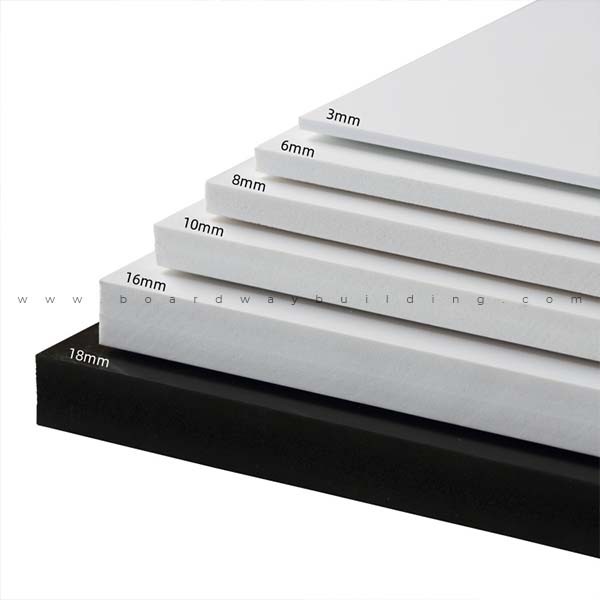
PVC Foam Board Thickness
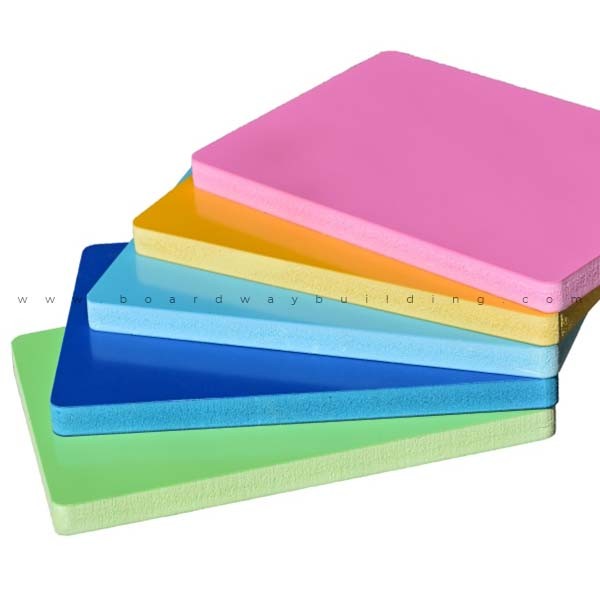
Colored PVC Foam Board
Recommended Density and Thickness for Different Applications
PVC Foam Board for Advertising & Signage
Lightweight boards with smooth surfaces are ideal for UV printing, screen printing, and digital printing. Easy cutting and handling make them popular in the signage industry.
PVC Foam Board for Kitchen Cabinets & Furniture
These specifications provide excellent moisture resistance, good screw holding strength, and long-term dimensional stability—making PVC foam board a superior alternative to plywood or MDF in humid environments.
PVC Foam Board for Interior Decoration & Construction
Higher density boards offer improved rigidity and impact resistance, suitable for wall panels, partitions, ceilings, and decorative architectural elements.
PVC Foam Board for Heavy-Duty & Structural Applications
For applications requiring enhanced load-bearing capacity—such as furniture structures, worktops, or special construction uses—high-density PVC foam boards provide outstanding mechanical performance and durability.

PVC Foam Board for Advertising
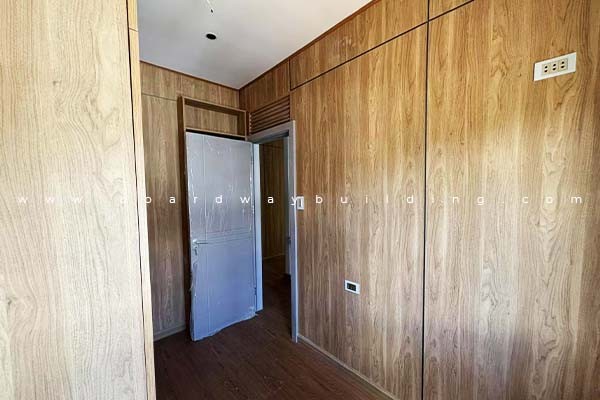
PVC Decorative Panel
How to Balance Performance and Cost
Choosing the highest density or maximum thickness is not always the best solution. Over-specifying materials may unnecessarily increase costs without delivering additional value.
The key is to:
Match board specifications to real application requirements Consider environmental conditions (humidity, temperature, load) Balance strength, durability, and budget
An experienced manufacturer can help optimize this balance.
Common Mistakes When Choosing PVC Foam Board
When selecting PVC foam board, many buyers focus primarily on price or general specifications, without fully considering the actual application environment and performance requirements. As a result, the material may fail to meet expectations in terms of strength, durability, or service life. Based on real project feedback and manufacturing experience, the following mistakes are among the most common—and most costly—when choosing PVC foam board for commercial and industrial use.
Selecting low-density boards for load-bearing applications
Low-density PVC foam boards are lightweight and economical, but they are not designed for structural or load-bearing purposes. Using them in furniture frames or construction elements may lead to bending, deformation, or premature failure.
Ignoring screw holding requirements in furniture design
Density plays a crucial role in screw holding strength. Choosing boards with insufficient density can result in loose fittings, reduced stability, and shorter product lifespan, especially in cabinets and furniture applications.
Using thin boards where rigidity is required
Thickness directly affects bending resistance and overall rigidity. Thin boards used in partitions, shelves, or large panels may warp or vibrate over time if thickness is underestimated.
Focusing only on price instead of long-term performance
Selecting the lowest-cost option without considering durability, application conditions, and replacement costs often leads to higher expenses in the long run.
Avoiding these mistakes can significantly reduce failure risks, improve product performance, and ensure better return on investment for buyers.
How Boardway Helps You Choose the Right PVC Foam Board
With 18 years of manufacturing experience, Boardway provides:
Stable production of PVC foam boards from 0.4 to 1.1 g/cm³ Full thickness range from 1mm to 40mm Consistent quality control and performance stability Application-based technical advice and customized solutions Sample support and project-oriented recommendations
We don't just supply boards—we help customers choose the right solution.
Conclusion: Choose the Right Specification for Long-Term Performance
Selecting the right density and thickness of PVC foam board is essential for achieving durability, safety, and cost efficiency. By understanding how these parameters affect performance, buyers can make smarter material choices and avoid common pitfalls.
For professional guidance and customized PVC foam board solutions, working with an experienced manufacturer makes all the difference.
Looking for the right PVC foam board for your project?
Contact Boardway today for expert selection advice, samples, or customized specifications tailored to your application needs.
- Want to learn more about PVC foam boards? Visit our PVC Foam Board main page.
- READ MORE