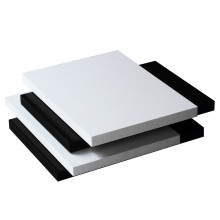
The Manufacturing Process of PVC Foam Board: From Raw Resin to Finished Sheet
PVC foam board is widely used across industries such as signage, furniture, construction, transportation, and interior decoration. Its lightweight structure, rigidity, waterproof performance, and excellent machinability make it a highly reliable material for both decorative and structural applications. For B2B buyers, understanding how PVC foam board is manufactured helps evaluate quality, compare suppliers, and determine whether a manufacturer has the technical capability and consistency required for long-term cooperation. With 18 years of production experience, Boardway has established a mature and highly controlled manufacturing system that transforms raw PVC resin into high-performance foam sheets.
1. Why the Manufacturing Process Matters
The performance of PVC foam board is shaped by every step of production—from the precision of the raw formula to the stability of the extrusion process. Differences in temperature control, screw design, foaming agent ratios, surface cooling, and thickness calibration can significantly influence the rigidity of the board, smoothness of the surface, uniformity of the internal cellular structure, and long-term durability.
For example, a stable manufacturing system ensures:
This is why technical capability directly translates to product reliability.
2. Understanding PVC Foam Board
PVC foam board—also known as free foam board or celuka foam board—is produced by extruding PVC resin mixed with a foaming system and various performance-enhancing additives. During extrusion, chemical foaming creates a lightweight micro-cellular structure inside the sheet, while the outer surface remains solid, matte, and smooth.
Its unique advantages include:
These qualities explain why PVC foam board has become a preferred material in diverse industries.
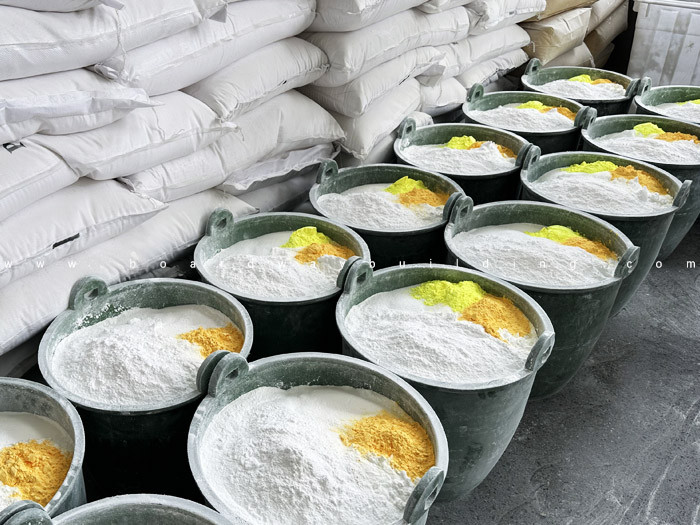
Boardway Raw Materials
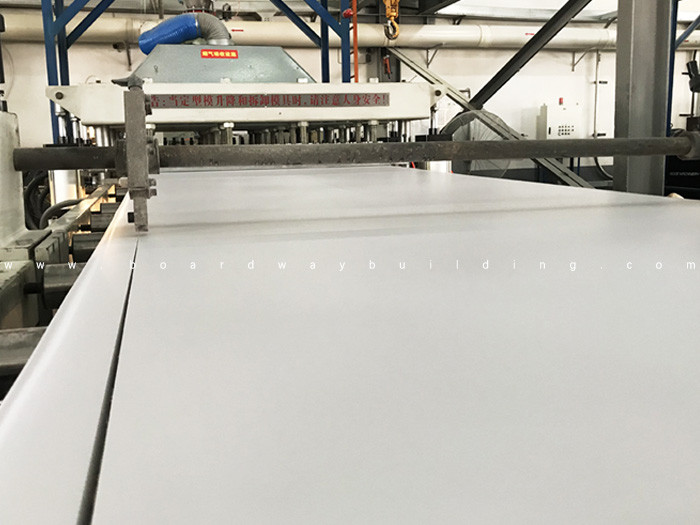
Boardway PVC Production Line
3. Raw Materials: Where Quality Begins
Every high-quality PVC foam board begins with a carefully designed formulation. PVC resin is the base material, and the additives determine the performance and stability of the final sheet.
A typical formulation includes:
A precise balance of these materials ensures good surface appearance, uniform density, and stable performance.
4. Compounding and Mixing
Before extrusion, all ingredients must be blended uniformly. The dry mix is prepared using a high-speed mixer, where rapid rotation generates heat that helps the additives disperse evenly into the PVC resin. Once mixed, the compound is transferred to a cooling mixer to prevent premature foaming.
This stage ensures:
By the time the mixture leaves this section, it is ready for extrusion.
5. Extrusion: The Core of PVC Foam Board Production
The cooled compound enters the extruder, where a precisely engineered screw conveys it through multiple temperature zones. As the material melts, internal pressure builds, and the foaming agent activates.
Inside the extruder:
Once the molten compound reaches the die head, it begins to take the form of a sheet. The die determines the width, initial thickness, and overall surface quality. Consistency at this stage ensures that the foam structure is uniform and the sheet is stable and rigid.
6. Manufacturing Technologies: Free Foam, Celuka, and Co-extrusion
PVC foam boards can be produced through several forming technologies, and each method gives the board a distinct surface quality and structural performance. Among the most widely used processes are Free Foam, Celuka, and Co-extrusion.
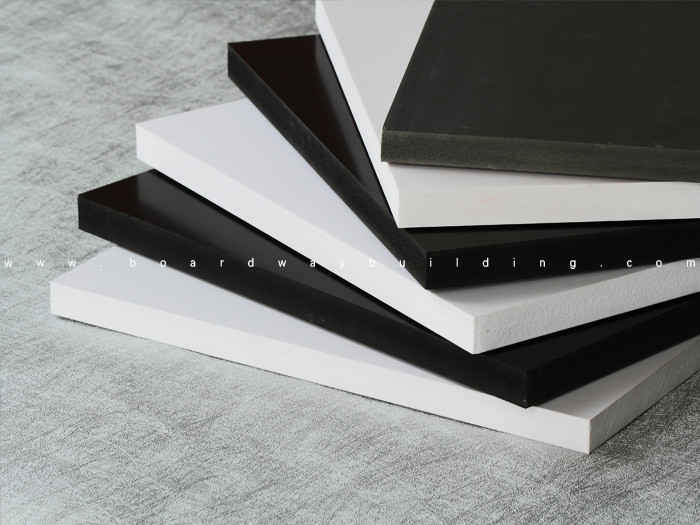
Free Foam Process
In the Free Foam method, the material expands naturally after leaving the die, creating a lightweight board with a fine, matte surface. This process produces a uniformly foamed core and a smooth texture that works especially well for printing, display boards, and general interior use.
Key notes: softer surface, excellent printability, good cost efficiency.
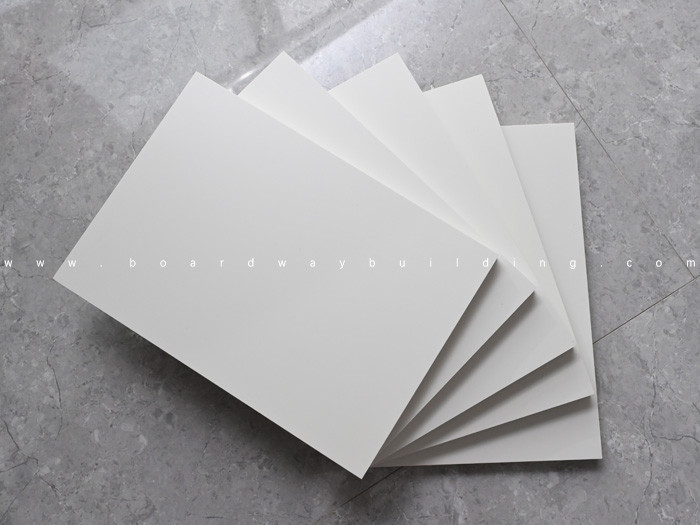
Celuka Process
The Celuka process adds controlled cooling at the surface, forming a thin, dense outer skin while keeping the core lightweight. This results in a harder surface, cleaner edges, and better mechanical strength, making it suitable for furniture, cabinetry, decorative trims, and other applications requiring sturdier performance.
Key notes: more rigid surface, sharper edges, stronger screw-holding strength.
Co-extrusion Process
Co-extrusion employs multiple extruders to form a foamed PVC core together with one or more non-foamed PVC surface layers in a single continuous operation. Because the surface skins are solid (not foamed), they provide a denser, harder outer layer that can be engineered for scratch resistance, improved color stability, UV performance, or special finishes such as high gloss or super-matte. An important advantage of this method is the ability to produce two-colour boards — the core and the surface can be extruded in different colours or formulas, giving both functional and aesthetic flexibility for high-end furniture, decorative panels, RV interiors, and premium signage.
Key notes: non-foamed functional surface layer; possible to produce two-colour (surface vs core) boards; enhanced surface durability and finish options.
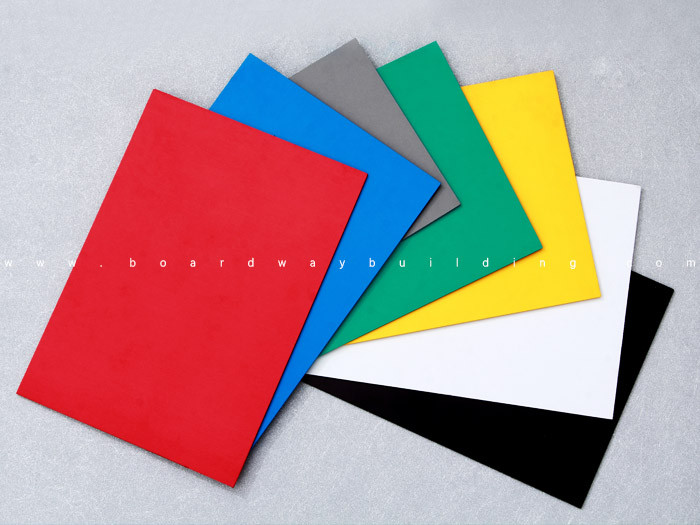
PVC Free Foam Board
PVC Celuka Foam Board
Co-extruded Foam Board
7. Cooling, Calibration, and Thickness Stabilization
After exiting the die, the sheet enters a vacuum calibration table. The vacuum molds the sheet onto precision plates, ensuring perfect flatness and exact thickness. Controlled cooling is essential to prevent warping, bending, or surface defects.
This stage controls:
The sheet then passes through a long water-cooling line before being pulled steadily forward by the haul-off unit.
8. Surface Finishing, Trimming, and Optional Upgrades
After cooling, the sheet is fully formed and ready for finishing. The edges are trimmed to achieve the required dimensions, and the surface may undergo additional treatment depending on the customer's application.
Possible custom options include:
These added processes allow Boardway to provide semi-finished or ready-to-assemble solutions.
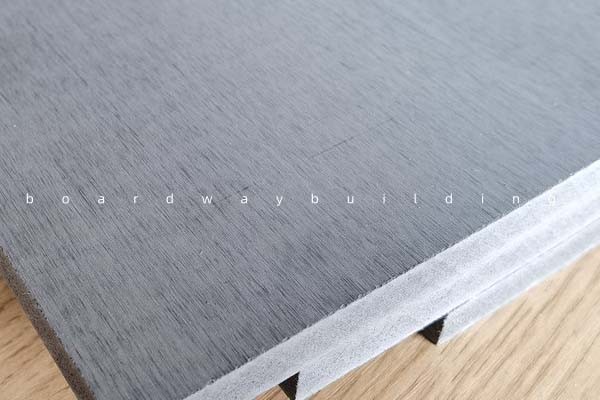
PVC Foam Board Sanding
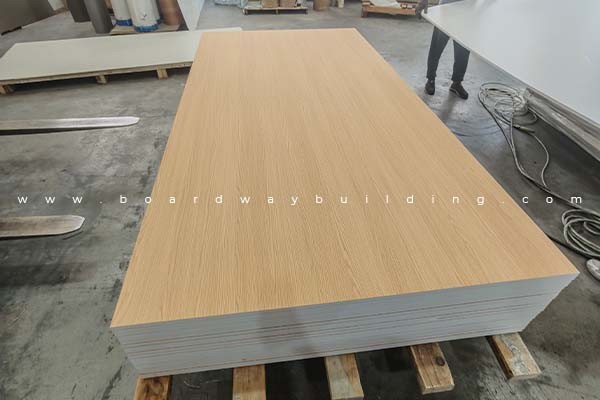
Laminated PVC Foam Sheet
9. Quality Control and Performance Testing
Before packaging, each batch undergoes strict quality checks. Inspections focus on both physical appearance and mechanical performance.
Typical QC items include:
10. Packaging and Shipping
The finished sheets are cleaned, protected with PE film, and stacked neatly on pallets. Proper packaging prevents scratches, dents, and deformation during transportation. For export markets, the boards are loaded into containers using moisture-resistant packaging and strong pallet structures, ensuring safe delivery to customers worldwide.
Boardway also offers customized packaging solutions for distributors who require brand labeling or special pallet configurations.
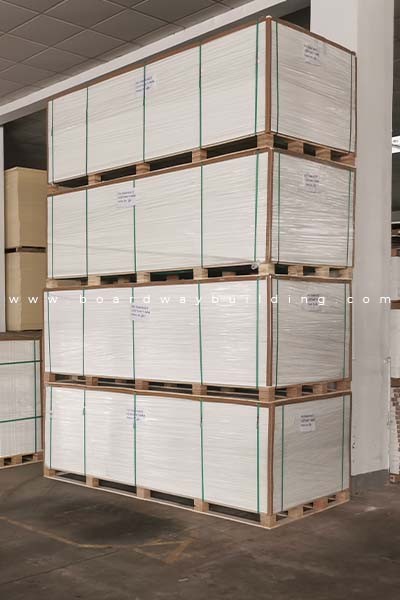
Pallet Packaging
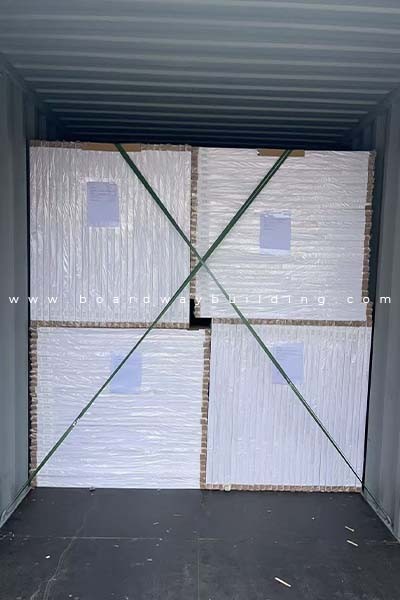
PE Bag Packaging
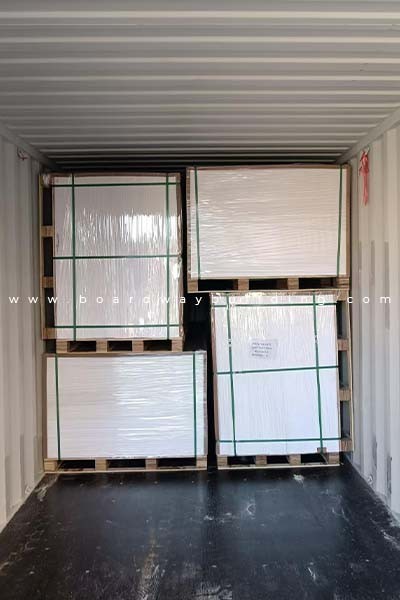
Loading
11. Why Choose Boardway
With 18 years of experience in PVC foam board manufacturing, Boardway has developed a production system built on advanced extrusion technology, a stable and mature formulation, and precise quality-control standards. Our factory is equipped to support a wide spectrum of customization needs—from density and thickness to colors, surface finishes, and post-processing options—allowing us to serve both distributors and large industrial users efficiently. Every batch is carefully monitored and traceable, ensuring consistent physical performance and reliability across long-term supply. Combined with fast production cycles and global shipping capabilities, Boardway has become a dependable partner for customers who require PVC foam boards that perform consistently, whether the application involves lightweight signage or more demanding furniture-grade and structural uses.
12. Conclusion
The production of PVC foam board is a carefully controlled process involving formulation design, compounding, extrusion, foaming, cooling, calibration, finishing, and inspection. Each stage plays a critical role in shaping the final performance of the board. Understanding this process helps customers make informed decisions and ensures that they partner with a manufacturer capable of delivering stable, high-quality products. Through years of experience and continuous improvement, Boardway has become a trusted partner for customers seeking reliable PVC foam board materials for demanding commercial applications.
- Want to learn more about PVC foam boards? Visit our PVC Foam Board main page.
- READ MORE