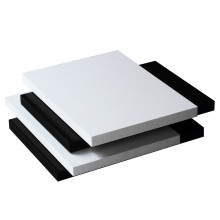
Is PVC Foam Board Waterproof and Fire Resistant? A Complete Guide
PVC foam board has become a widely used material in industries such as construction, advertising, furniture manufacturing, and interior decoration. Known for its lightweight structure, smooth surface, and excellent durability, it is often chosen as a modern alternative to traditional materials like plywood and MDF.
However, when buyers or project managers consider using PVC foam board, two common questions often arise:
Is PVC foam board waterproof? Is PVC foam board fire resistant?
These questions are especially important for applications in humid environments, public buildings, and transportation interiors where safety and durability are critical.
In this guide, we will explain the water resistance and fire performance of PVC foam board, explore the reasons behind these properties, and discuss how they benefit different industries.
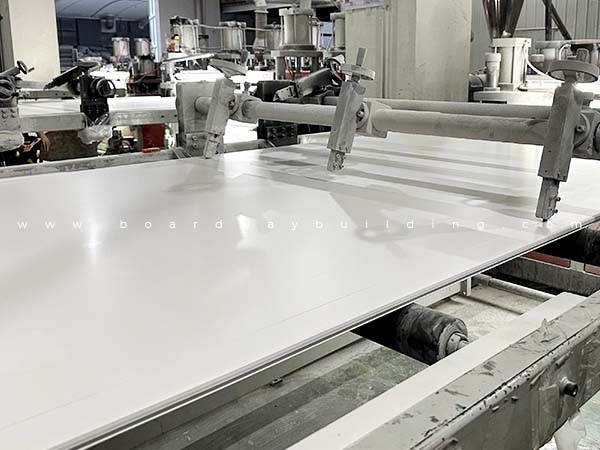
PVC Foam Board Production
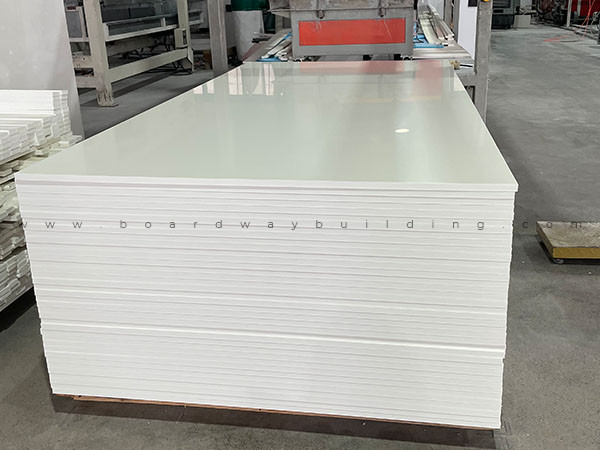
PVC Foam Board
What Is PVC Foam Board?
PVC foam board is a lightweight rigid plastic sheet made primarily from polyvinyl chloride (PVC) resin combined with foaming agents, stabilizers, and additives. During production, the material undergoes a foaming extrusion process that creates a uniform internal structure.
This manufacturing process forms a closed-cell foam structure, which gives the board several key advantages:
Lightweight but strong Moisture resistant Corrosion resistant Easy to cut, drill, and fabricate Smooth surface suitable for printing and lamination
Because of these properties, PVC foam board is widely used in applications such as signage, wall panels, furniture boards, display stands, and construction materials.
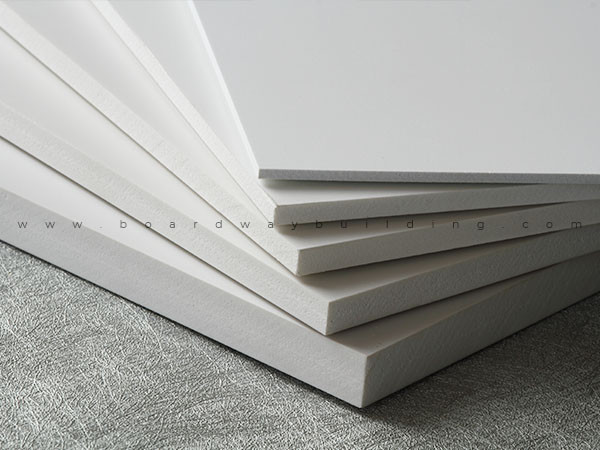
PVC Foam Board Different Thicknesses
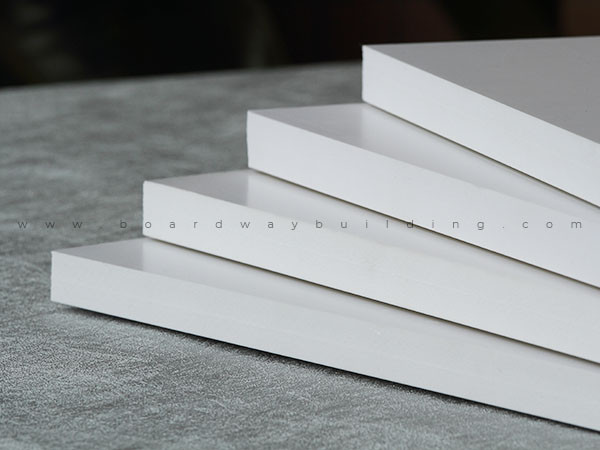
Closed-cell Structure
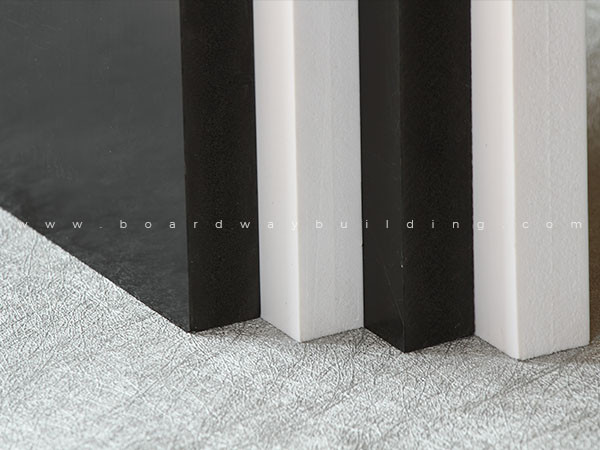
Smooth Surface
Is PVC Foam Board Waterproof?
One of the most valuable properties of PVC foam board is its excellent resistance to water and moisture.
Why PVC Foam Board Is Water Resistant
PVC foam board is considered waterproof for several reasons.
1. PVC Material Does Not Absorb Water
Polyvinyl chloride itself is a non-porous plastic material that does not absorb water. Unlike wood-based boards, it does not swell, rot, or deteriorate when exposed to moisture.
2. Closed-Cell Foam Structure
The foaming process creates tiny closed cells inside the board. These cells prevent water from penetrating the material, which further enhances its moisture resistance.
3. Dense and Smooth Surface
High-quality PVC foam boards have a compact outer surface that acts as an additional barrier against water and humidity.
Because of these characteristics, PVC foam board maintains its shape, strength, and surface quality even in humid environments.
Applications in Moisture-Prone Environments
Thanks to its waterproof performance, PVC foam board is often used in areas where traditional materials may fail.
Common applications include:
Bathroom cabinets and vanity boards Kitchen furniture and wall panels Outdoor advertising signs Marine and transportation interiors Exhibition display structures
In these applications, PVC foam board provides a longer service life compared with materials that are sensitive to moisture.
Is PVC Foam Board Fire Resistant?
Another important feature of PVC foam board is its natural flame-retardant property.
Why PVC Has Flame Retardant Characteristics
PVC contains chlorine in its chemical structure. This element contributes to the material's ability to resist combustion.
Compared with many plastics and wood-based boards, PVC materials generally have better fire resistance.
When exposed to flame:
PVC foam board does not ignite easily The material burns slowly It typically self-extinguishes once the fire source is removed
This property makes PVC foam board safer for indoor construction and commercial applications.
Fire Ratings and Safety Standards
In many building and industrial applications, PVC foam boards can meet flame-retardant classifications such as B1 grade depending on formulation and production quality.
These standards indicate that the material:
Resists flame spread Produces limited heat during combustion Stops burning when the ignition source is removed
For projects where fire safety is a critical factor, selecting a certified flame-retardant PVC foam board is recommended.
PVC Foam Board vs Traditional Materials
To better understand the advantages of PVC foam board, it is useful to compare it with traditional panel materials.
| Material | Waterproof | Fire Resistance | Durability |
| PVC Foam Board | Excellent | Good | High |
| Plywood | Poor | Poor | Medium |
| MDF | Poor | Poor | Low |
To better understand the advantages of PVC foam board, it is useful to compare it with traditional panel materials.
Wood-based panels like plywood and MDF tend to absorb moisture, which can cause swelling, deformation, and structural damage over time. They are also more combustible.
PVC foam board, on the other hand, offers greater resistance to both water and fire, making it suitable for demanding environments.
Industries That Benefit from These Properties
Because of its waterproof and flame-retardant characteristics, PVC foam board is widely used across multiple industries.
Construction and Interior Decoration
PVC foam board is often used for:
Wall panels Ceiling boards Decorative partitions Cabinet structures
Its resistance to moisture makes it particularly useful in kitchens, bathrooms, and basements.
Signage and Advertising
In the advertising industry, PVC foam board is valued for its:
Smooth printable surface Lightweight structure Weather resistance
It is commonly used for indoor signage, exhibition boards, and promotional displays.
Furniture Manufacturing
Furniture manufacturers use PVC foam board as a substitute for wood in:
Cabinet boards Wardrobe panels Shelving structures
The waterproof property helps prevent damage caused by humidity.
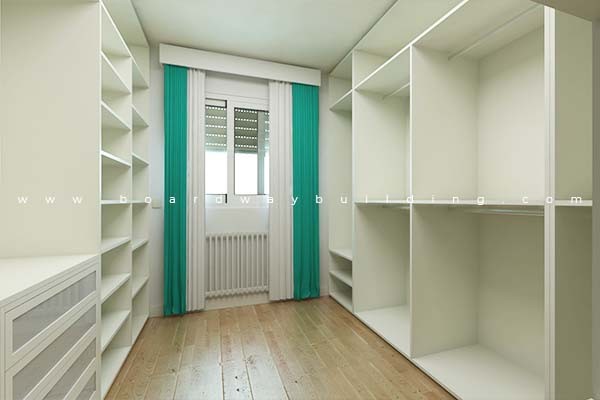
PVC Foam Board for Furniture
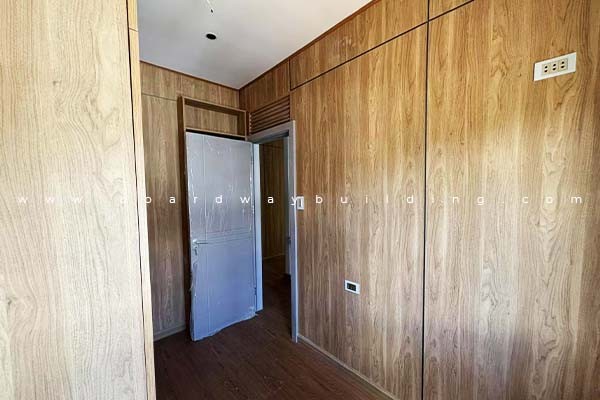
PVC Decorative Panel
Transportation and Marine Applications
PVC foam board is also used in transportation interiors such as:
Bus interior panels Marine decorative boards Vehicle furniture components
The material's durability and moisture resistance make it suitable for these environments.
How to Choose the Right PVC Foam Board
Selecting the correct PVC foam board depends on the specific application.
Several factors should be considered.
Thickness
Different applications require different thicknesses.
Typical examples include:
3-5 mm – advertising signs and display boards 8-12 mm – wall panels and interior decoration 15-18 mm – furniture boards and cabinet structures
Density
Higher density boards usually provide:
Lower density boards are lighter and more economical for signage applications.
Surface Finish
PVC foam boards can have different surface treatments depending on their intended use, such as:
Matte surfaces for printing Laminated surfaces for decoration Smooth surfaces for fabrication
Choosing the correct specification helps ensure optimal performance and durability.
Why Manufacturers Prefer PVC Foam Board
Many manufacturers and contractors choose PVC foam board because it offers a balanced combination of performance and practicality.
Key advantages include:
Lightweight yet strong Waterproof and moisture resistant Flame-retardant safety characteristics Easy processing (cutting, drilling, printing, laminating) Long service life
Low maintenance requirements
These benefits make PVC foam board a reliable material for modern industrial and commercial applications.
Conclusion
PVC foam board is a versatile material that combines excellent water resistance with natural flame-retardant properties. Its closed-cell structure prevents moisture absorption, while the inherent characteristics of PVC provide improved fire safety compared with many traditional materials.
Because of these advantages, PVC foam board has become an important material in industries such as construction, signage, furniture manufacturing, and transportation interiors.
For projects that require lightweight, durable, and moisture-resistant panels, PVC foam board is often one of the most practical solutions available.
With 18 years of manufacturing experience, Boardway provides high-quality PVC foam boards designed for a wide range of industrial applications.
Frequently Asked Questions
Q1. Is PVC foam board completely waterproof?
A: Yes. PVC foam board does not absorb water and performs very well in humid environments.
Q2. Can PVC foam board catch fire?
A: PVC foam board is flame retardant and generally self-extinguishing when the fire source is removed.
Q3. Can PVC foam board be used outdoors?
A: Yes. PVC foam board can be used outdoors, although UV protection or surface treatment may be recommended for long-term exposure.
Q4. Is PVC foam board better than wood?
A: In humid environments, PVC foam board is usually more durable than wood-based boards because it does not swell, rot, or absorb moisture.
- Want to learn more about PVC foam boards? Visit our PVC Foam Board main page.
- READ MORE